Next up in Gingold Theatrical Group’s 2021-22 season of Project Shaw – a monthly series offering some of the greatest works of George Bernard Shaw and his contemporaries – is the Irish playwright’s Village Wooing of 1933, to be presented live on Monday, December 13, at Symphony Space, beginning at 7 pm. The evening event, which is expected to run for approximately 90 minutes, will also include the presentation of GTG’s Golden Shamrock Awards, inspired by Shaw’s humanitarian activism and given annually by the company to celebrate artistic and cultural contributions to society.
Photo courtesy of Gingold Theatrical Group.
In Shaw’s short romantic comedy, two people, both determined to remain single, meet in a chance encounter on an around-the-world cruise that changes their lives in the most unexpected ways once they decide to “take the journey.” It will be directed by GTG Artistic Director David Staller and performed script-in-hand for one night only by multiple award-winning Broadway stars and real-life couple Maryann Plunkett (Me and My Girl) and Jay O. Sanders (Girl from the North Country), who appeared together for eleven years in the twelve plays of Richard Nelson’s Rhinebeck Panorama, which just concluded with its final installment this fall.
Before the reading begins, the actors, along with long-time GTG Board Member Ethan E. Litwin (a partner at Constantine Cannon LLP, specializing in antitrust litigation, and a tireless supporter of the arts in NYC), will be honored for their humanitarian endeavors. The recognition was originally planned to be a part of last year’s Gingold gala, which had to be cancelled in March 2020, as a result of COVID-19. Past honorees include Tom Viola, Martha Plimpton, Tyne Daly, Kate Mulgrew, Kenneth Lonergan, Charles Busch, Judith Ivey, Robert Osborne, Terrence McNally, and Brian Murray.
Village Wooing plays on Monday, December 13, 2021, at Gingold Theatrical Group, performing at Symphony Space, Leonard Nimoy Thalia Theatre, 2537 Broadway, NYC. For tickets (priced at $40, with discounts for students and children), call (212) 864-5400, or go online. Everyone must show proof of COVID-19 vaccination to enter the building and must wear a mask at all times when inside.
The new big-budget musical-theater production of the popular 1993 award-winning movie starring Robin Williams, Mrs. Doubtfire is the latest in a long list of screen-to-stage adaptations that bank on the familiarity of a film to bring its fans to Broadway. With its huge cast and zany production numbers, elaborate scenic design and costumes, and over-the-top physical humor, it undoubtedly will attract an audience base that can relish the preposterous, embrace the laughs, and disregard the work’s offensive gender-related stereotypes. Tootsie, which played on Broadway in 2019, elicited similar criticism and protests of its perceived transphobia and misogyny, but garnered eleven Tony nominations and took home two, for best book of a musical and best actor.
Avery Sell, Jake Ryan Flynn, Analise Scapaci, Jenn Gambatese, and Rob McClure. Photo by Joan Marcus.
As with the original movie, the premise of the show, with a book by Karey Kirkpatrick and John O’Farrell, and music and lyrics by Wayne Kirkpatrick and Karey Kirkpatrick (creators of the extremely witty ten-time Tony-nominated Something Rotten!), requires a total suspension of disbelief. The wild comedy revolves around the lengths to which Daniel Hillard – an immature irresponsible husband, father, and out-of-work actor who specializes in voice-overs – will go to maintain close contact with his kids after losing custody in a contentious divorce.
When his ex-wife Miranda searches for a nanny to care for their three children while she’s at work, he disables responses to her help-wanted ad and enlists the aid of his gay brother and his partner, costume and make-up artists at a present-day San Francisco TV station, to make him into a woman so he can get the job. He assumes the guise of a Scottish nanny he spontaneously names Mrs. Doubtfire, is hired by Miranda, and neither she nor their son or daughters recognize him. But they bond with his alter-ego, and, after his true identity is accidentally revealed, they all grow, learn the importance of familial love, agree to shared custody, and are just fine with his duplicitous actions, controlling machinations, and outrageous lies to get what he wants. Okay.
The show, which began Broadway previews on March 9, 2020, and was originally slated to open that year on April 5, was reworked and ‘updated’ during the pandemic shutdown, but, for me, it’s still missing the up, which just makes it dated. Aside from the central characterization of a talented performing artist as childish and frivolous, there are also some serious issues with the clichéd portrayal of gender identities, laughing at cross-dressing and those who don’t fit the straight cis-gender norm, and defining accomplished professional women (the thankless roles of his wife, his court-appointed overseer, his new boss, and the real-life inspirations for the dowdy look of Mrs. Doubtfire) as mean, controlling, unattractive, and humorless. Funny.
J. Harrison Ghee, Brad Oscar, Charity Angél Dawson, and Rob McClure. Photo by Joan Marcus.
And at the risk of being categorized as yet another mean and humorless professional woman, it’s also impossible to believe that Miranda wouldn’t have an even bigger issue with him as a role model for their kids than she did before, proving to them that it’s okay to do whatever it takes to get what you want in the name of love (including attempting to destroy her budding relationship with the very nice, and very fit, Stuart Dunmire). Really?
With that said, and that’s quite a mouthful, the cast, directed with rapid-fire energy by four-time Tony winner Jerry Zaks (Hello, Dolly!), does its best with the absurd plot points and characters, led by Tony nominee Rob McClure (Chaplin) as the hyperactive man-child turned titular nanny. He never misses a beat in his quick-change transitions from Daniel to Doubtfire, spot-on array of assumed character voices, lightning-fast one-liners, and masterful physical comedy. He also sings everything from hard rock to heartfelt ballads to supposedly improvised rap in the eclectic, but not particularly memorable, score, including surreal production numbers in which legions of imagined characters and people from his laptop screen come to life and dance (choreography by Lorin Latarro; music supervision, arrangements, and orchestrations by Ethan Popp).
The cast. Photo by Joan Marcus.
Among the other standouts in the large supporting cast and ensemble (aside from the four understudies at the performance I attended) are J. Harrison Ghee as the outspoken and take-charge make-up artist Andre Mayem, Peter Bartlett as the aging and out-of-touch TV children’s show host Mr. Jolly, and Analise Scarpaci as the Hillards’ adolescent daughter Lydia, who steals every scene she’s in with her killer vocals and convincing range of emotions towards her dad.
A top-notch artistic design is indispensable to the show, and it has one. The set by David Korins easily shifts to the identifiable changing locations of the story, and lighting by Philip S. Rosenberg and sound by Brian Ronan enhance both the realism and the fantasy of the different scenes. And central to the thematic concept are the character-defining costumes by Catherine Zuber, hair and wigs by David Brian Brown, and make-up and transformative prosthetics by Tommy Kurzman, which are handled with skill by McClure.
If you can forget about all the illogic and overlook the gender-identity faux pas of the plot in our current times, and just want a ridiculous escapist musical reincarnation of the movie, the cast and design of Mrs. Doubtfire could have you laughing and entertained.
Running Time: Two hours and 30 minutes, including an intermission.
Mrs. Doubtfire plays through Sunday, May 29, 2022, at the Stephen Sondheim Theatre, 124 West 43rd Street, NYC. For tickets (priced at $49-249), call (212) 239-6200, or go online. All audience members must wear a properly fitting mask over the nose and mouth while inside the theater, except when eating or drinking in designated areas. Everyone ages 12 and older must be vaccinated with an FDA or WHO authorized vaccine.
This is my first time experiencing the Improvised Shakespeare Company, and as I sit down to write a review of their performance, I have to be honest — I’m almost speechless. Seeing this group perform feels like witnessing a whole new art form: their work is a combination of improvisational comedy, poetry, sketch comedy, and theater all in one. I feel like I need to buy tickets for another show so I have something to judge them against. Simply comparing them against other improv comedy performances feels almost unfair.
The work these comedians are doing is far more than simple “yes, and…”-ing. For those not in the know, the Improvised Shakespeare Company is an improvisational comedy troupe — they take an audience suggestion and make up a comedy sketch on the spot — but they do it in iambic pentameter, in Elizabethan English (with only occasional modern-sounding quips, which I never felt were overused or relied upon for a break from the more complicated language), and create a full hour-plus-long, multi-act play out of it. Regular improv is hard enough. I didn’t get into Georgetown’s improv troupe. It’s really hard.
In my (relatively brief) experience, most regular “long-form improv comedy” shows consist of three to five “scenes,” which, sans a few callbacks, are more or less unconnected to one another in terms of plot and characters. The Improvised Shakespeare Company has tasked themselves with not only improvising each scene but also creating characters with distinguishing personality traits, catchphrases, running jokes, and satisfying arcs — who also speak in Shakespearean English. Oh, and they have to play these characters while also playing a whole gamut of others over the course of the show.
Ross Bryant, Joey Bland, Blaine Swen, and Greg Hess in The Improvised Shakespeare Company. Photo by Koury Angelo.
Almost immediately into the show, one finds oneself thinking: there has to be some secret here. I have worked in satirical writing, sketch comedy, and comedy podcasting, and I have to say: the only way these guys could possibly do this is to have some kind of preordained template to keep the plot moving along at the pace necessary to have the play finish up, with all arcs completed, i’s dotted and t’s crossed, in an hour and a half. They have to have some kind of plan for what needs to happen in which scene of the show, having pre-planned characters who simply adjust their motivations to the audience suggestion who accomplish X, Y, or Z. What I am ultimately saying is, of course, this show is bafflingly impressive, with all that “how’d they do that?” charm.
I also think that given the troupe has been active since 2005, they likely have taught themselves Shakespearean English like a foreign language, and now speak it fluently. Translating a thought to a language in their heads would simply be too hard.
Hopefully, I am painting a picture of the absolutely stunning display I witnessed at the Kennedy Center. I am stuck at my laptop, puzzling like a mad scientist over how they could possibly have pulled this off. That’s what you’re in for. Go.
I have hardly anything to critique. The show began with a soliloquy from one of the five players (Ross Bryant), who built off of the audience’s suggested phrase (at this show, that phrase was “Just Say No,” which was, of course, the anti-drug advertising campaign in the ’80s and ’90s created and championed by Nancy Reagan). Perhaps my only real critique of this show — and perhaps my only clue to its execution — is that the soliloquy (summed up, in crude modern language, of course) boiled down to “Just say no to drugs… and love is a drug! Here’s a play about love.”
Greg Hess and Ross Bryant, Ross Bryant and Blaine Swen in The Improvised Shakespeare Company. Photo by Koury Angelo.
The play itself was a look at the troubled romance between Helena and Ajax of ancient Greek (and Spartan… and Shakespearean) ilk, and called back specifically to the phrase “Just Say No” on multiple occasions. Still, the slight, noticeable drift from the original audience-generated prompt was hardly noticeable until it came up in the post-show discussion I had with the friend I went with.
Occasionally, there seemed to be more characters than I could keep track of (the five actors played far more than five characters over the course of the show), and the complicated language didn’t help me get back on track — but ultimately, I was getting too much entertainment value at all times from the whip-smart comedy for character confusion to become a real issue.
The show was laugh-out-loud funny, profoundly impressive on a technical level, and inspiring to me as a young person in comedy. If I have time next week I’m going to try to go again, so I can judge this group against themselves. I really have no other frame of reference for the art form these guys have created, so it’s only fair.
The Improvised Shakespeare Company is a traveling seven-player comedy troupe: each performance features five performers. The show I saw December 10, 2021, included Brendan Dowling, Greg Hess, Ross Bryant, Joey Bland, and troupe founder Blaine Swen.
Running Time: Approximately 80 minutes, with no intermission.
The Improvised Shakespeare Companyplays through December 19, 2021, in the Theater Lab at the Kennedy Center – 2700 F Street, NW, in Washington, DC. For tickets ($35–$45), call (202) 467-4600 or go online.
COVID Safety: The Kennedy Center Vaccination and Mask Policy is here.
Now in its 33rd year, the Manhattan-based non-profit ballet company Dances Patrelle (dP) celebrates the 25th anniversary of founding artistic director and choreographer Francis Patrelle’s The Yorkville Nutcracker with a weekend of four performances at Hunter College. The annual family-friendly holiday tradition has been re-envisioned and reset in 1895 NYC by Patrelle, whose body of work includes over 50 original ballets choreographed in a wide range of styles for his eponymous company.
Photo courtesy of Dances Patrelle.
The dP’s reworked staging of the 19th-century two-act Christmas staple takes audiences on a magical tour through New York, with stops at some of its most familiar landmarks – Gracie Mansion, the lake at Central Park, and the Grand Conservatory of the Bronx Botanical Gardens – to enjoy the iconic characters of the 1892 Russian classic, along with real-life figures from New York’s past, a large of assemblage of dignitaries from around the world, and people from different countries and a wide range of ethnicities, representative of our melting-pot culture, dancing to Tchaikovsky’s beloved score. It’s a unique combination of narrative ballet with a lesson in NYC history, including such well-known personages as Mayor William L. Strong and his family, Theodore Roosevelt (then President of the Board of Police Commissioners), and the Babcocks (owners of Gracie Mansion before it was sold to the City, later to become the official mayoral residence), as explained in the extensive program notes by Steven Burns and Robert Dorf.
In keeping with Patrelle’s mission of nurturing and celebrating dramatic ballet, inspiring and encouraging aspiring dancers, and making the art accessible to all, the production contains a large ensemble of young children and students from eleven participating ballet schools who want to learn and have been given the invaluable opportunity to appear on stage with seasoned members of the troupe and special guest artists.
Photo courtesy of Dances Patrelle.
This year’s outstanding roster of principal dancers features Abi Stafford (who recently retired after 21 years with the New York City Ballet) as the Sugar Plum Fairy, Tyler Angle as her Cavalier (appearing courtesy of NYCB), freelance artists Maximilien Baud as the Snow King and Graceanne Pierce as the Snow Queen, and Christopher Charles McDaniel as the Snow Prince (courtesy of Dance Theatre of Harlem). Their consummate skill, grace, strength, and agility in superb solos and seemingly weightless pas-de-deux not only dazzled the audience, but surely provided the perfect role models for their up-and-coming cast mates. Other highlights included Shannon Maynor performing the Arabian Divertissement with exquisitely elegant extensions and the corps de ballet’s light and beautiful Dance of the Flowers, with delightful demi-soloists Tanja Whited and Miranda Berlin.
The performance is enhanced with painted scrims and backdrops (by resident set designer Gillian Bradshaw-Smith) and lavish costumes (by resident costume designer Rita B. Watson) that evoke the era, style, and locales of Olde New York, and lighting that captures the progression of the hours, both outside and indoors, on Christmas Eve (by resident lighting designer David Grill). At the matinee I attended, there was a technical glitch in the sound system’s pre-recorded music that caused a brief delay, but the intrepid artists completed the scene and returned to the stage once it was remedied. It was another important lesson for the young ballet students – the show must go on, and it did.
Running Time: Approximately one hour and 50 minutes, including an intermission.
The Yorkville Nutcracker plays through Sunday, December 12, 2021, at Dances Patrelle, performing at The Kaye Playhouse at Hunter College, East 68th Street between Park and Lexington Avenues, NYC. For tickets (priced at $69, with extended family, group, student, and senior discounts available), visit the box office, call (212) 772-4448, or go online. Prior to entering the venue, all audience members must provide proof of vaccination along with a photo ID and must wear a mask upon entering the building and for the entire time inside.
When August Wilson wrote and performed his autobiographical monologue, How I Learned What I Learned, in 2003, he was already a renowned playwright, having received a Pulitzer Prize, a Tony, and other high-level awards, as well as having earned the admiration of the entire theater community.
What’s curious about Wilson’s script is that it makes no mention of any of his plays or how and why Wilson chose playwriting as his medium. Until a projection of play titles in the final moment of Avant Bard’s creditable production, an audience member unfamiliar with Wilson would never learn that he had become a playwright at all.
For the likely vast majority of the audience who know and have been moved by Wilson’s work, the most interesting thing about Wilson’s reminiscences of his youthful self is how his experiences as a child and young man resonate in his plays. He is deeply grounded, and has a strong sense of place, in the Black community of Pittsburgh. He knows what it is like to live in a milieu where casual, deadly violence is an unpredictable constant. He has an unshakeable need to maintain and assert his dignity. He knows racism up close and personal, from repeated assaults on that dignity that are too important to dismiss as “microaggressions.”
William T. Newman Jr. as August Wilson in ‘How I Learned What I Learned.’ Photo by Christopher Banks.
Wilson tells his story through a series of sometimes extended anecdotes, not as a chronology but more in the spirit of a jazz improv (following Wilson’s strong identification with jazz, sound designer David Lamont Wilson provides a fine jazz-dominated score for the production). Some of the stories are sweet, like one about Wilson’s schoolboy crush on a girl from whom he gets his first kiss. Some are frightening, as when he witnesses someone being stabbed to death for having said “the wrong thing to the wrong person at the wrong time.” Some tell of inspiration, as when John Coltrane’s playing in a club enchants a crowd standing outside. He is not shy about recounting awkward mistakes he made, which eventually taught him about situations in which keeping silent is the best response.
But Wilson keeps returning to what it means to be Black in American society: a story of quitting a grass-cutting job when his boss wouldn’t support him against a white woman who didn’t want him on her property; his mother’s rejection of a used washing machine offered as a prize for winning a contest instead of the promised new machine (which taught him that “sometimes nothing is better than something”); his being denied an available envelope by a bank clerk for cash he received for a check after obtrusive checking of his ID.
William T. Newman Jr. as August Wilson in ‘How I Learned What I Learned.’ Photo by Christopher Banks.
(A parenthetical note from my personal experience: this sort of thing keeps on happening. Today. I’ve worked professionally for years with what are called “disparity studies,” lengthy pieces used to document the continuing need for race-conscious affirmative action programs. The anecdotal portions of these studies regularly include stories that Wilson would recognize in an instant, like a Black business owner being denied a bank loan and then having the loan approved when he sends a white employee to the bank with the same financial information.)
William T. Newman Jr. takes on the task of bringing Wilson’s stories to the audience. Newman, an experienced actor, embodies Wilson the storyteller in an informal, sometimes ruefully humorous way, never self-important. At moments that call for greater intensity, such as the murder he witnesses or imagining God condemning the clerk who refused him the envelope, Newman shows the passion that Wilson often brings to his fictional characters. Given the two-hour length of the show, Newman’s performance was an achievement not only of characterization but of endurance.
Director DeMone Seraphin and the Avant Bard production team create what is both a warm and informative atmosphere for the storytelling. The set (Megan Holden) consists of a desk and chair upstage in the Gunston Theater Two black box, with the tall stacks of paper standing in for the writing to which the script never directly alludes. The lighting (John D. Alexander) is suitably subtle, highlighted by a series of video screens that show pictures of Wilson’s Pittsburgh neighborhood, book and album covers of people Wilson admired (e.g., Coltrane and poet Amiri Baraka), and photos and name cards for people who were important to Wilson. Paris Francesca gives Newman a series of costume pieces — a hat here, a sport coat there — for different parts of his stories, the most memorable of which may be the first, a T-shirt proclaiming “I was supposed to be white.”
William T. Newman Jr. as August Wilson in ‘How I Learned What I Learned.’ Photo by Christopher Banks.
The production is a satisfying ramble through what made the young August Wilson the person he became. The play represents Wilson’s choices about what stories he thought were important to tell about himself in 2003, when he was 58. It would have been rewarding to see what Wilson — who died of cancer two years later — might have added in a revised version of the play about his later life, about how an aspiring young poet became determined to write plays and how he educated himself to acquire the tools of that exacting craft in a way that would make the lives of Black Americans so vibrantly visible to audiences. There would have been some stirring stories there for him to tell in his own words, I expect.
Running Time: Two hours, with no intermission.
How I Learned What I Learnedplays through December 19, 2021, presented by Avant Bard Theatre performing at Gunston Arts Center Theater Two, 2700 South Lang Street, Arlington VA. There is ample free parking and the venue is accessible via public transportation. For schedule details, visit avantbard.org. Tickets are $40 and are available at avantbard.org or by calling 703-418-4808. Advance-Purchase Pay-What-You-Will tickets are also on sale online for all performances beginning the Sunday before each show.
COVID Safety: Either proof of vaccination or a negative COVID test is mandatory for entry and face coverings must be worn at all times while in the building. Avant Bard follows the VDH/CDC recommendations for preserving public health.
In her new one-woman show Is There Still Sex in the City?, making its Off-Broadway debut at the Daryl Roth Theatre in a limited engagement through February 6, writer Candace Bushnell – the now 63-year-old author of Sex and the City – reflects on her life, relationships, and career, and shares personal anecdotes and inside stories about the real people and experiences that inspired her best-selling book and popular characters (Carrie, Miranda, Charlotte, Samantha, and more) and gave rise to the hit HBO series, all adapted from her original column of the same name for The New York Observer (1994–96).
Candace Bushnell. Photo by Joan Marcus.
The 80-minute first-person retrospective, directed by Lorin Latarro and delivered in a casual direct-address format of autobiographical storytelling, also broaches the subject of the position of women in a predominantly patriarchal society from the mid-century to the present, the contributions Bushnell made in defining and encouraging the sexual liberation of women in the ‘90s, and lauding the importance of having a support system of enduring female friendships, which far outlasts fleeting romantic liaisons. And she intersperses her reminiscences with “lessons learned” across the decades of her life from her current perspective – most notably, to “be your own Mr. Big.”
Being a writer, not a performer, Bushnell lacks the professionally trained voice, control, and timing, and had some obvious trip-ups with the script. But her presentation was intimate and engaging, as she moved around the stage, pouring herself cosmos, well-known to fans as the drink of choice of her alter-ego Carrie Bradshaw (and which the audience can buy for $18 at the theater bars), frequently changing her signature Manolos and designer fashions (costume design by Lisa Zinni), and reclining on her luxurious pink sofa – all brought in from her own NYC apartment and embodying Madonna’s 1984 hit “Material Girl” with her conspicuous consumption (played pre-show, along with other top songs by pop divas of the era, to set the tone), which, today, generally comes off as more self-indulgent, showy, and self-aggrandizing than feminist or empowered.
Candace Bushnell. Photo by Joan Marcus.
Of course, the monologue kept coming back to the eponymous topic of sex, writing about which brought her success, fame, and financial independence (“Sex Sells” is another important lesson to be gained from her career), with sometimes juicy and often regretful memories and details, including the concept of “having sex like a man” (that is, without love) and life since her divorce in 2012, when she was already in her mid-fifties. The show also includes segments of audience participation in which she asks the house to decide if a series of episodes she relays from her past did or didn’t really happen (eliciting an enthusiastic and consistently accurate response) and the entrance of the two well-groomed pet poodles she’s lived with post-divorce (which drew even greater approval).
The program is enhanced by a chic scenic design by Anna Louizos, featuring a fully stocked bar cart, garment rack, and open shelving with samples of Bushnell’s “obsessive” shoe collection; projections of photos of the people, places, and events she discusses by Caite Hevner; stylishly colorful post-modern lighting by Travis McHale; and an effective soundscape by Sadah Espii Proctor that becomes absolutely heavenly every time shoes are mentioned. It all provides support for an interesting account of what she did and how she made it, who she was and how she sees it now.
Running Time: Approximately 80 minutes, without intermission.
Candace Bushnell. Photo by Joan Marcus.
Is There Still Sex in the City? plays through Sunday, February 6, 2022, at the Daryl Roth Theatre, 101 East 15th Street, NYC. For tickets (priced at $69-299), go online. VIP tickets include a premium seat, a meet-and-greet with Candace Bushnell following the performance, an autographed copy of her book, and a cosmo cocktail.
All audience members must provide proof of vaccination, proof of a negative PCR test taken up to 72 hours prior to performance, or proof of a negative antigen test taken up to 6 hours prior to performance. In addition, masks are required at all times within the building. Masks should fit snugly around the nose, mouth, and chin. Disposable masks are available upon request.
In the 1982 movie Tootsie, unemployed actor Michael Dorsey (played by Dustin Hoffman) disguises himself as a woman and becomes soap star Dorothy Michaels. Tootsie at the National Theatre updates the film as an all-singing, all-dancing, all-laughing musical comedy.
Tootsie premiered in Chicago in 2018 and won the 2019 Tony for Best Book of a Musical on Broadway. The music and lyrics by David Yazbek and book by Robert Horn are inventive, hysterically funny, and beautifully synchronized. The cast is terrific. The production is handsomely mounted, with direction by Dave Solomon (original Broadway direction was by Scott Ellis).
Center: Drew Becker as Dorothy Michaels and Lukas James Miller as Max Van Horn with cast of the national tour of ‘Tootsie.’ Photo by Evan Zimmerman for MurphyMade.
The plot is well known to anyone who has seen the movie, and some who haven’t. Michael Dorsey (Drew Becker) is a New York actor who is perennially out of work, due to his perfectionism and argumentative personality As a tomato in a commercial, he refused to sit down because “it isn’t logical.” Sometimes such performers falsely believe that no one understands the depth of their talent. Michael doesn’t have that problem; he really is talented. But as his agent, Stan Fields (Steve Brustien), tells him, “Everyone hates you.”
His ex and close friend, Sandy (Payton Reilly), is auditioning for the part of Juliet’s Nurse in a musical winsomely entitled Juliet’s Curse (no, I’m serious). Michael, desperate for work, transforms himself into Dorothy Michaels. He wins the role with a knockout performance of the Nurse’s stirring number voicing her promise to Juliet: “I Won’t Let You Down.”
As Dorothy, Becker instinctively grasps the charm and compassion inherent in the character; his performance, like Hoffman’s, is reminiscent of Jack Lemmon’s as Daphne in the 1959 Billy Wilder classic Some Like It Hot, which Lemmon said was based on his mother. Becker is paired with a dynamite Juliet in Ashley Alexandra. As the young actress, Julie Nichols, Alexandra serenades Dorothy with the gently tuneful “There Was John,” recounting her long-ago choice of ambition over love.
Payton Reilly as Sandy Lester; Drew Becker as Michael Dorsey and Ashley Alexandra as Julie Nichols; and Jared David Michael Grant as Jeff Slater in the national tour of ‘Tootsie.’ Photos by Evan Zimmerman for MurphyMade.
Payton Reilly’s Sandy is frighteningly insecure, but she executes her dizzyingly difficult opening number, “What’s Gonna Happen,” with the precision of an ice skater in the dance portion of the Olympics. Jared David Michael Grant as Michael’s bestie, Jeff Slater, has a jovial, outgoing style; and as a friend, he’s not afraid to tell Michael when he has screwed up, as in his epic soliloquy, “Jeff Sums It Up.”
Ashley Alexandra as Julie Nichols in the national tour of ‘Tootsie.’ Photo by Evan Zimmerman for MurphyMade.
Dorothy attracts the romantic interest of the actor who plays Romeo’s brother, Craig (no, really), Max Van Horn (Lukas James Miller). He is a younger man who cannot for the life of him understand why he is drawn to someone so old (he mentions it frequently). Dorothy takes it with good humor (perhaps age has given her wisdom), and the two of them have some strikingly comic scenes together, which I will not ruin for you by describing.
The dynamic Kathy Halenda is excellent as the ultimate Broadway producer Rita Marshall. The whirlwind Dorothy modernizes Juliet’s Curse, dropping the Elizabethan swords and gowns and changing the period to the 1950s. The play becomes Juliet’s Nurse; and Craig, like the actor who plays him, falls for the Nurse instead of for Juliet. The director character, Ron Carlisle (Adam du Plessis), is driven to therapy in typical Manhattan fashion by this dramaturgical journey through madness.
With original Broadway choreography by Denis Jones, tour scenic design by Christine Peters (original scenic design for Broadway was by David Rockwell), lighting design by Donald Holder, sound design by Brian Ronan, and costume design by William Ivey Long, Tootsie is a triumph.
The Ensemble are Leyla Ali, Connor Alston, Darius Aushay, Michael Bingham, Kyra Christopher, Delaney Gold, Danielle J.S. Gordon, Maverick Hiu, Dominique Kempf, Marquez Linder, Lucy Panush, and Alec Ruiz.
Tootsie shines with romantic insanity, reminding us that love, like musical comedy, belongs to us all.
Running Time: Approximately two hours 30 minutes, including a 15-minute intermission.
Tootsieplays through December 12, 2021, at The National Theatre, 1321 Pennsylvania Ave NW, Washington, DC. Tickets ($65–$110) are available to purchase online. There is also a $25 digital lottery.
COVID Safety: The National Theatre vaccination and masking policies are here.
CREDITS
Book by Robert Horn Music and Lyrics by David Yazbek Based on the story by DON McGUIRE and LARRY GELBART and the COLUMBIA PICTURES motion picture produced by PUNCH PRODUCTIONS and starring DUSTIN HOFFMAN Broadway Choreography by DENIS JONES Directed by DAVE SOLOMON Original Broadway Direction by SCOTT ELLIS
CAST Michael Dorsey/Dorothy Michaels:Drew Becker Julie Nichols:Ashley Alexandra Sandy Lester:Payton Reilly Max Van Horn:Lukas James Miller Jeff Slater:Jared David Michael Grant Rita Marshall:Kathy Halenda Stan Fields:Steve Brustien Ron Carlisle:Adam du Plessis Carl:Alec Ruiz Stuart:Connor Alston Suzie:Dominique Kempf Gone Female Trio:Leyla Ali, Delaney Gold, Dominique Kempf Ensemble:Leyla Ali, Connor Alston, Darius Aushay, Michael Bingham, Kyra Christopher, Delaney Gold, Danielle J.S. Gordon, Maverick Hiu, Dominique Kempf, Marquez Linder, Lucy Panush, Alec Ruiz Swings:Lexi Baldachino, Ashton Lambert Dance Captain:Lexi Baldachino Assistant Dance Captain:Ashton Lambert
CREATIVE TEAM Music & Lyrics:David Yazbek Book:Robert Horn Director:Dave Solomon Original Broadway Director:Scott Ellis Broadway Choreography:Denis Jones Supervising Music Director, Vocal & Incidental Arrangements:Andrea Grody Music Coordinator:Talitha Fehr Dance Arrangements:David Chase Orchestrations:Simon Hale Music Supervisor:David Sharenow Music Director:Andrew David Sotomayor Original Scenic Design for Broadway:David Rockwell Tour Scenic Design:Christine Peters Costume Design:William Ivey Long Costume Coordinator:Christopher Vergara Lighting Design:Donald Holder Sound Design:Brian Ronan Hair & Wig Design:Paul Huntley Make-Up Design:Angela Avallone
Along with shining a spotlight on the group’s sizzling Broadway-caliber talent, The Boy Band Project: Holiday Edition, which played at Feinstein’s/54 Below on Monday, December 6, provided fabulous photo ops to capture all the hot moves, feelings, camaraderie, and fun of the super-exciting and entertaining tribute show inspired by the popular boy-band phenomenon of the 1990s. And both the venue and The BBP not only allow everyone there to take photos and videos, they encourage it, so fans can take home and share their own personal digital memories of the night.
Photographer (and devoted BBP fan girl!) Tamra Anne Sheehan was there and got great shots of it all, from the high-energy choreography, heartfelt emotions, and hilarious parodies to their tantalizing costumes, steamy good looks, and direct interactions with each other and the audience.
The Boy Band Project. Photo by Tamra Anne Sheehan.The Boy Band Project. Photo by Tamra Anne Sheehan.The Boy Band Project. Photo by Tamra Anne Sheehan.The Boy Band Project. Photo by Tamra Anne Sheehan.The Boy Band Project. Photo by Tamra Anne Sheehan.The Boy Band Project. Photo by Tamra Anne Sheehan.Sam Harvey and Christopher Brasfield. Photo by Tamra Anne Sheehan.Sam Harvey, Travis Nesbitt, and Christopher Brasfield. Photo by Tamra Anne Sheehan.The Boy Band Project. Photo by Tamra Anne Sheehan.The Boy Band Project. Photo by Tamra Anne Sheehan.Jesse JP Johnson. Photo by Tamra Anne Sheehan.Jesse JP Johnson. Photo by Tamra Anne Sheehan.Christopher Brasfield. Photo by Tamra Anne Sheehan.Christopher Brasfield. Photo by Tamra Anne Sheehan.Sam Harvey. Photo by Tamra Anne Sheehan.Sam Harvey. Photo by Tamra Anne Sheehan.Travis Nesbitt. Photo by Tamra Anne Sheehan.Travis Nesbitt. Photo by Tamra Anne Sheehan.The Boy Band Project. Photo by Tamra Anne Sheehan.The Boy Band Project. Photo by Tamra Anne Sheehan.The Boy Band Project. Photo by Tamra Anne Sheehan.
If you missed the one-night-only show at Feinstein’s/54 Below, The Boy Band Project will be bringing their NYC-based brand of holiday cheer to The Palm cabaret in Puerto Vallarta, Mexico, December 21-29.
For updates on their local New York and East Coast appearances, you can follow The Boy Band Project on Facebook.
Virgil’s ancient Roman maxim “tempus fugit” is nowhere more apparent than in the life of New Jersey teenager Kimberly Levaco in 1999. Afflicted with a rare genetic disorder that causes her body to age at four-and-a-half times the normal rate, she is just turning sixteen, but looks like a 72-year-old. Her time is flying by, and this milestone birthday marks the average life expectancy for someone with her incurable condition.
Victoria Clark. Photo by Ahron R. Foster.
The theme, inspired by the real-life disease progeria (also known as Hutchinson-Gilford Syndrome) has the makings of a heartbreaking tragedy, but along with the touching poignancy in Kimberly Akimbo – the new musical from Tony Award winner Jeanine Tesori (music) and Pulitzer Prize winner David Lindsay-Abaire (book and lyrics), based on his critically-acclaimed play of the same name – is uproarious coming-of-age comedy, zany familial dysfunction, and an uplifting reminder to all of us to find happiness in life whenever, wherever, and while it’s still possible.
Jessica Stone’s engaging direction captures the perfect mix of lively over-the-top dark humor punctuated with tender moments of profound heartrending reality, with an emphasis on the wacky storyline, off-beat personalities, and the positivity that drives the eponymous character. And the newly added songs (with music direction by Chris Fenwick, orchestrations by John Clancy, additional orchestrations by Macy Schmidt, and choreography by Danny Mefford) embrace and elevate the tender moods with heartfelt ballads and the sidesplitting hilarity with youthful energy and laugh-out-loud lyrics that lampoon NJ, teen angst, and assorted felonies (though the highly entertaining song list is not included in the musical’s Playbill program).
The cast. Photo by Ahron R. Foster.
Born in 1959, Tony winner and multi-award nominee Victoria Clark (The Light in the Piazza) turns in a thoroughly irresistible, sensitive, and heartwarming performance as the smart, funny, and good-natured Kimberly, believably embodying her adolescent behavior, mindset, and mannerisms, affectingly balanced with the very adult challenges of dealing with her unstable family, her outsider status, the blossoming of first love, and her impending mortality, shockingly foreshadowed in a dramatic disguise she puts on late in the narrative (costume by Sarah Laux, and hair and makeup by J. Jared Janas). It’s a brilliant portrayal that is rich with compassion and filled with deep understated emotion that should garner Clark many more accolades and awards.
Taking on the roles of her laughably unlikeable and ridiculously insensitive parents are Steven Boyer as Buddy (an irresponsible lying drunk, whose rare instances of fatherly concern only serve to embarrass Kim, just as his repeatedly broken promises disappoint her) and Alli Mauzey as Pattie (an indolent self-absorbed hypochondriac, pregnant with her second child, who makes thoughtless comments to her daughter and a video for the baby she’s expecting, defending herself from what others say about her and promoting her questionable claim that she’s a “good mother”). Their outlandish conduct forces Kim to assume the maturity they lack, to maneuver through her impossible situation with little support, and to keep the wild (and legally indictable!) family secrets that drove them to flee their home in Secaucus.
With the unexpected arrival of Kim’s unwelcome Aunt Debra, from whom they were hiding – an outspokenly vulgar ex-con and relentless scam artist delivered with unabashed audacity and perfect comic timing by the riotous powerhouse Bonnie Milligan – all is revealed, even more sparks fly in the family, and a fraudulent check scheme is soon underway. She masterminds the plan, then enlists and instructs Kim and her small circle of adorably nerdy new friends, with whom she hangs out at school, the library, and the skating rink (in a fluid scenic design by David Zinn), to carry it out.
Victoria Clark, Justin Cooley, Nina White, Fernell Hogan II, Bonnie Milligan, Olivia Elease Hardy, and Michael Iskander. Photo by Ahron R. Foster.
The kids are played by the across-the-board excellent and vocally harmonious Olivia Elease Hardy as Delia, Fernell Hogan II as Martin, Nina White as Teresa, Michael Iskander as Aaron, and 2021 Jimmy Award finalist Justin Cooley as Seth, who shares a shy awkwardness, a love of anagrams (rearranging the letters of Kimberly Levaco into “cleverly akimbo”), a biology class project on her aging disorder, a growing romantic attraction, and the offer of a first kiss, any time she wants it, with Kim.
As the characters reimagine their possibilities and perspectives, their determination to seize life surfaces and they all come face to face with the opportunities presented to them. With that, in addition to all the jocular songs and Jersey jokes, Kimberly Akimbo delivers a serious message to everyone, of every age, about the urgency of finding joy: don’t delay; the time to be happy is now. This quirky life-affirming musical is a well-spent two-and-a-half hours that definitively brings on the joy and made me happy.
Running Time: Approximately two hours and 20 minutes, including an intermission.
Kimberly Akimbo plays through Saturday, January 15, 2022, at Atlantic Theater Company, performing at the Linda Gross Theater, 336 West 20th Street, NYC. For tickets (priced at $81.50-111.50), go online. Audience members must show proof of complete COVID-19 vaccination before the date of attendance and mask-wearing is required indoors at the theater.
Events DC, the official convention and sports authority for the District of Columbia, has announced a new partnership with TheatreWashington on a series of short films spotlighting the richness and variety of the professional theater community in DC. Titled Backstage at the Helen Hayes Awards, the three-part interview series debuts on December 8, 2021, on GATHER by Events DC, Events DC’s platform for live and on-demand programming from the worlds of culture, sports, and entertainment. The films celebrate the safe and highly anticipated reopening of the District’s theaters and provide an entertaining and personal look into the lives that have made DC the second largest and most successful theater community in the nation.
The series will debut on GATHER by Events DC according to the following schedule:
William Knowles and Roz White in ‘Backstage at the Helen Hayes Awards.’ DCMTA screenshot.
12/08/2021 – Episode 1: Roz White and William Knowles Roz White, actress, vocalist, and teaching artist with composer, performer, and music director William Knowles discuss their shared history in #dctheatre including at MetroStage, Alexandria, Virginia. Filmed at the historic Anacostia Playhouse in DC
Emika Abe and Maria Manuela Goyanes
12/15/2021 – Episode 2: Maria Manuela Goyanes Emika Abe, Managing Director of DC’s Woolly Mammoth Theatre talks with Maria Manuela Goyanes, the second-ever artistic director atWoolly Mammoth Theater Company, nationally known for producing new work and original productions
Alicia B. Adams and Debbie Allen
12/22/2021 – Episode 3: Debbie Allen Alicia Adams, Vice President of International Programming at the John F. Kennedy Center interviews Debbie Allen, prominent dancer, director, actress, filmmaker, and recent recipient of both the Kennedy Center Honors and the Emmy’s Governor Award
Theatre Washington is the producer of the Helen Hayes Awards and the only organization dedicated to supporting and representing all sectors of DC’s professional theater community. Supported by their efforts and the awareness generated by the Helen Hayes Awards, Washington, DC’s professional theater community has grown from a handful of theaters and producing companies in the 1980s to a staggering 90 today.
The three-part series is the latest addition to the diverse program portfolio featured on GATHER by Events DC. It will captivate viewers seeking compelling, locally relevant on-demand content to enjoy anytime, anywhere.
Events DC, the official convention and sports authority for the District of Columbia, delivers premier event services and flexible venues across the Nation’s Capital. Leveraging the power of a world-class destination and creating amazing attendee experiences, Events DC generates economic and community benefits through the attraction and promotion of business, athletic, entertainment and cultural activities. Events DC oversees the Walter E. Washington Convention Center, an anchor of the District’s hospitality and tourism economy that hosts more than 1.7 million visitors and generates more than $400 million annually in direct economic impact, and the historic Carnegie Library at Mt. Vernon Square. Events DC manages the RFK Stadium-Armory Campus (RFK Campus), including Robert F. Kennedy Memorial Stadium, Festival Grounds at RFK Campus, the non-military functions of the DC Armory, and the Skate Park at RFK Stadium. Stay current on the 190-acre RFK Campus Redevelopment Project at www.RFKCampus.com. Events DC also built and serves as landlord for Nationals Park, the first LEED-certified major professional sports stadium in the United States. Events DC manages Gateway DC, R.I.S.E. Demonstration Center and Entertainment & Sports Arena all conveniently located in the Congress Heights neighborhood of Washington, DC. For more information, please visit www.eventsdc.com and find us on social media – Facebook, Instagram and YouTube (Events DC), and Twitter (@TheEventsDC) — and on our new hub for live and on-demand event programming on GATHER by Events DC at www.gatherbyeventsdc.com.
ABOUT THEATRE WASHINGTON
Theatre Washington is an alliance of theater organizations, theater-makers, and theater supporters that promotes equitable, healthy, and diverse regional theater in the greater Washington, DC, region. They do this through partnerships and programs that celebrate artistic achievement, support institutional growth and advancement, and cultivate collective action.
Theatre Washington was established in 1984 with the goal of recognizing outstanding achievements in Washington, DC-area theater through the annual Helen Hayes Awards. In subsequent years, the organization has expanded its mission to meet the evolving needs of the region’s growing cultural community, continuing to recognize artists and organizations through the nationally recognized Helen Hayes Awards program and advocating for local artists, attracting audiences, and providing services to the more than 90 professional theaters throughout the Washington, DC, region. theatrewashington.org
ABOUT THE HELEN HAYES AWARDS
Founded in 1984 by Bonnie Nelson Schwartz — who also acted as a producer for the Backstage at the Helen Hayes Awards series — the Helen Hayes Awards recognize outstanding achievements from more than 60 professional theaters and hundreds of theater-makers across the DC area each year. Named for Helen Hayes — the legendary First Lady of the American Theatre and a Washington, DC, native — the awards celebrate the artists and companies whose work makes the Washington, DC, area a thriving, nationally recognized theater community.
Award nominations result from a year-long process in which 40 volunteer judges on five panels attend as many as 200 eligible productions, including dozens of world premieres. The Helen Hayes Awards are traditionally celebrated each spring during a festive awards ceremony and after party.
The Backstage at the Helen Hayes Awards series was created to celebrate the work of the theater community as the Awards paused due to the COVID-19 pandemic. This initial series celebrates the resiliency of the theater community by giving recognition and celebrating the strong history of exciting theater in the DC region.
At a luncheon at Feinstein’s/54 Below, Tony Award winner Brian Stokes Mitchell (Kiss Me, Kate), on behalf of The Actors Fund, for which he has served as Chairman of the Board since 2004, accepted a generous $100,000 donation check from the Tabernacle Choir, to provide support and to give back to the Broadway community that has given them so much over the years. A tireless advocate for the theater community, Mitchell, an accomplished actor, singer, musician, and arranger, has been a guest soloist with the Choir in three major concerts and has maintained a close personal association and collaboration with the Choir’s leadership for more than a decade.
Brian Stokes Mitchell (center) and representatives from the Tabernacle Choir. Photo by Deb Miller.
The afternoon event was held in celebration of the upcoming 20 Years of Christmas with the Tabernacle Choir, an anniversary retrospective hosted and narrated by Stokes (as he is known to his friends and colleagues) and premiering on PBS on Monday, December 13, at 8 pm, and on BYUtv on December 16, at 9 pm. During the worldwide pandemic of 2020, The Tabernacle Choir at Temple Square was quiet, and the Conference Center in Salt Lake City was dark and empty. But then, with no public announcement and absolutely no fanfare, the acclaimed star of the stage and screen, and 2016 inductee into the Theatre Hall of Fame, returned to remember twenty years of inspiring Christmas concerts, preserving a beloved tradition that had to be re-imagined due to COVID-19.
Brian Stokes Mitchell. Photo courtesy of PBS.
The two-hour star-studded broadcast will feature memorable performances from the past two decades by an array of Broadway, cabaret, TV, and movie stars, opera, gospel, and pop singers, and journalists, historians, and newscasters, including Kristin Chenoweth, Audra McDonald, Kelli O’Hara, Angela Lansbury, Gladys Knight, Natalie Cole, Richard Thomas, Jane Seymour, Hugh Bonneville, the Muppets, Santino Fontana, Renée Fleming, Deborah Voigt, John Rhys-Davies, the late Ed Herrmann, David Archuleta, Tom Brokaw, and many others. They are interspersed with intimate performances and storytelling by Stokes, taped last December, and following all COVID-19 safety protocol, in the empty 21,000 seat Conference Center on Temple Square, with just a handful of socially distanced Orchestra members and the Choir’s first-ever all virtual performance.
Brian Stokes Mitchell and Ruthie Fierberg. Photo by Deb Miller.
During the donation ceremony and program preview, Stokes was interviewed by arts journalist Ruthie Fierberg (who was also his son’s former babysitter), joined remotely on screen by the Choir’s music director, orchestrator, conductor, and composer Mack Wilberg. They discussed the artistic process and content of the upcoming show and lauded the power of the arts to bring people together, to uplift, and to touch hearts, just as, Stokes noted, these “two forces of good in the world [The Actors Fund and the Tabernacle Choir] have joined forces . . . to make things happen. It’s magical!”
The speakers also noted that everyone can help through “giving machines” at locations around the city for donations to charitable organizations, including The Actors Fund. Founded in 1882, The Actors Fund is a national services organization for the entertainment community, providing emergency financial assistance, affordable housing, health care, and more.
NextStop Theatre has announced five shows for the first half of 2022. The new schedule represents the gradual return and ongoing expansion of the company’s productions following the pandemic, as well as a continuation of their longstanding commitment to offering a diverse array of theatrical styles and stories, in and for the Northern Virginia community.
“After successfully being able to return to smaller productions this fall, we are unbelievably excited to take the second half of our season to the next level,” said Producing Artistic Director Evan Hoffmann. “Audiences are clearly ready to rediscover all the power, magic, and joy of live theater and we are certain that these shows will not disappoint!”
In late January 2022, the second half of the season begins with Every Brilliant Thing, a remarkable play that explores the precarious balance between the highest highs and lowest lows of life. Guided by an unnamed narrator, the audience is drawn into the story of a young boy who tries to cure his mother’s depression by creating a list of all the most wonderful things in the world. At times humorous and at others gut-wrenching, this extraordinary, interactive play brings the actor and audience along together on a unique journey of shared discovery and catharsis. Every Brilliant Thing is by Duncan MacMillan, will be directed by Nicole Maneffa (NextStop’s Matilda), and will star Evan Hoffmann as the Narrator. The production will perform from January 21 through February 13, 2022.
At the end of February, NextStop will stage The Legend of Georgia McBrideby Matthew Lopez. This hilarious and heartfelt comedy tells the story of Casey, an out-of-work Elvis impersonator, determined to find his spotlight and take care of his pregnant wife. Imagine his surprise when the solution he finds means trading in the King’s rhinestone jumpsuit for the bedazzled gown of a drag queen! Filled with witty banter, snazzy dance moves, and fabulous costumes, this warm and engaging love story challenges our notions of identity and family with remarkable depth and insight. The Legend of Georgia McBride will be directed by Lisa Bailey and will perform from February 25 through March 20, 2022.
In April, NextStop is honored to present Nat Turner in Jerusalem by Nathan Alan Davis, a powerful, historical drama about a significant chapter in Virginia and American history. In August 1831, Nat Turner led a slave uprising that shook the conscience of the nation. Turner’s startling account of his prophecy and the insurrection was recorded and published by attorney Thomas R. Gray. This timely play imagines Turner’s final night in a jail cell in Jerusalem, Virginia, as he is revisited by Gray and they reckon with what has passed, and what the dawn will bring. Nat Turner in Jerusalem will be directed by Bryanda Minix (NextStop’s An Act of God) and will perform from April 1 through 17, 2022.
As we emerge from winter, NextStop will partner in April with Reston Town Center to present a very special free-for-all, outdoor production of William Shakespeare’s most beloved comedy, A Midsummer Night’s Dream. The collaboration is a Theatre in the Park initiative that was first imagined in 2019 but was delayed by the pandemic. Both NextStop and Reston Town Center are optimistic that this production might launch a new community tradition of bringing free theater to the amphitheater in Reston Town Square Park, right in the heart of the Reston Town Center. A Midsummer Night’s Dream will be directed by Christopher Michael Richardson (NextStop’s A Turn of the Screw) and will have three free performances on April 30, 31, and May 1, 2022.
Capping off the season will be NextStop’s much-anticipated return to full-scale, live musical theater with a toe-tapping production ofLucky Stiff, featuring book and lyrics by Lynn Ahrens and music by Stephen Flaherty (Ragtime, Seussical, Anastasia). Harry Witherspoon is an unassuming shoe salesman with a truly boring existence until he is left $6 million in his uncle’s will. The only catch is that in order to cash in on his inheritance, Harry must first successfully take his uncle’s corpse on one final vacation to exotic Monte Carlo! Lucky Stiff will be directed and choreographed by Robert Mintz (NextStop’s Singin’ in the Rain) and will run from May 19 through June 12, 2022.
NextStop will continue their current policies requiring proof of vaccination and mask wearing at all times in the building (with the exception of performers on stage) for the foreseeable future. However, in the new year, the theater will return to their full 100-seat capacity and reopen the bar car for drinks and snacks before performances.
NextStop Theatre Company remains fully committed to placing the health and safety of their staff, artists, and community above all else. As such, NextStop maintains the right to cancel any performances and/or productions, should circumstances prove necessary. NextStop will offer full refunds in the event of cancellation and/or should a patron become uncomfortable with attending a live performance.
NextStop Theatre is accessible to persons with disabilities. Wheelchair accessible seating may be purchased online or by calling the box office, 703-481-5930 x1.
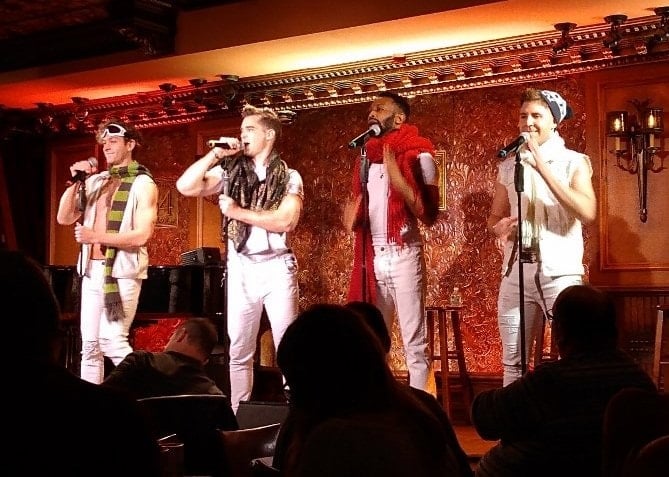
Following a dazzling debut at Feinstein’s/54 Below in August, The Boy Band Project returned to a packed house at the famed nightclub for one night only on December 6, with a new incarnation of their annual feel-good wintertime show The Boy Band Project: Holiday Edition. And not only did it have, as playfully promised, “all the feelings” of the romantic chart-toppers by the heart-throb guy groups from the ‘90s to the present, it had it all – the soaring vocals, tight harmonies, sexy moves, intimate repartee, drop-dead gorgeous looks, and tongue-in-cheek humor that has made them one of the hottest acts on the club circuit in the US and beyond.
The Boy Band Project. Photo by Deb Miller.
The cast (which rotates from show to show depending on their schedules) consisted of founder and producer Travis Nesbitt, Jesse JP Johnson, Christopher Brasfield, and Sam Harvey – all NYC musical-theater stars in their own right outside of The BBP. Together and individually they heated up the room with a tantalizing set list of songs and medleys and appropriately seductive choreography that included such quintessential boy band, BBP, and fan favorites as “Tearin’ Up My Heart” by *NSYNC, “I Want It That Way” and “Everybody” by Backstreet Boys, “You Got It (The Right Stuff)” by New Kids on the Block, One Dimension’s “What Makes You Beautiful” and “Story of My Life,” along with the two 1966 Beach Boys hits “God Only Knows” and “Wouldn’t It Be Nice.”
The Boy Band Project. Photo by Deb Miller.
To celebrate the season, the Boys (in winter-white costumes that, on their fit and muscular bodies, were somehow more suggestive of hot steam than cold snow), performed a selection of popular holiday numbers, from *NSYNC’s “Merry Christmas, Happy Holidays” and New Kids on the Block’s “Funky Funky Christmas” to “All I Want for Christmas” by Mariah Carey, “Last Christmas” by George Michael, and the heartwarming American classic “The Christmas Song,” written by Mel Tormé and popularized by Nat King Cole. And, of course, no BBP holiday show would be complete without their own suggestive video single “Jingle My Bells,” written for them by Michael Mott, which perfectly embraces the musical style, love-struck emotions, parodic wit, and alluring tone and demeanor of their irresistible homage to the original boy bands.
Whether working up a sweat in the high-energy numbers, sitting down for the heartfelt ballads, or pumping it up again with their vigorous physicality, it ain’t no lie – I’m a sucker for them. All I want for Christmas is The Boy Band Project: Holiday Edition for una noche each and every year – and lots more of their fabulously entertaining shows in between.
Running Time: Approximately 50 minutes, without intermission.
The Boy Band Project: Holiday Edition played on Monday, December 6, 2021, at Feinstein’s/54 Below, 254 West 54th Street, NYC. For future performances by the group, visit The BBP website; for the calendar of upcoming shows at the club, go online.
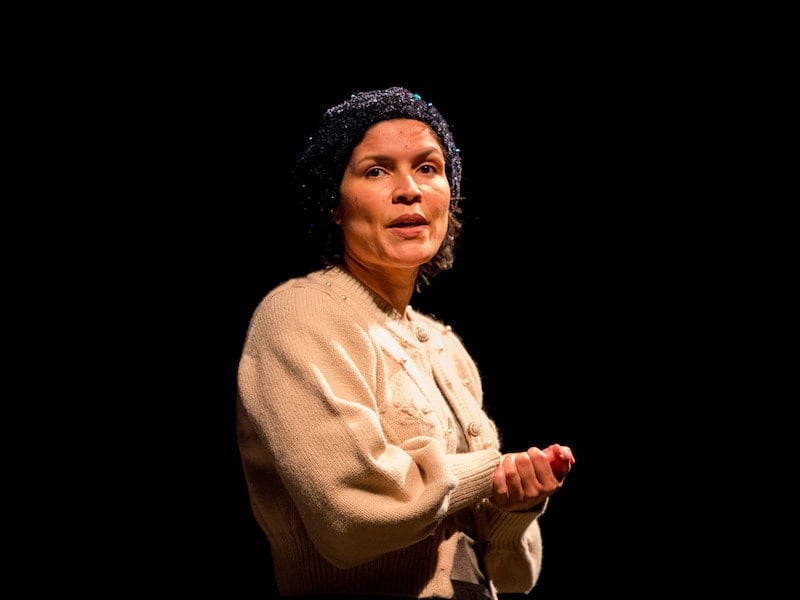
Fires in the Mirror is an exploration of the Crown Heights riot, a period of civil unrest in the community of Crown Heights in Brooklyn, New York, which resulted after the death of a seven-year-old Black boy who was struck by a vehicle driven by a Jewish man in August 1991.
Considering the premise and because it was a one-person show, I wasn’t expecting my strong emotional reaction and how I could identify with some of the people in the story. Playwright Anna Deavere Smith offers various perspectives on the events that occurred during that time based on interviews she conducted with the people involved in this tragic real-life event. As directed by Nicole Brewer, the show became a reflection of two marginalized communities trying to survive the biases against them while events boiled over and played out on the world stage.
Khanisha Foster in ‘Fires in the Mirror: Crown Heights, Brooklyn and Other Identities.’ Photo by J Fannon.
Scenic Designer Diggle did an amazing job mixing two very different concepts – a Native American land tribute and the streets of Crown Heights, Brooklyn, and turning the stage into a thing of beauty. (Baltimore Center Stage pays tribute to the Native Americans that the theater’s land belonged to prior to European colonization.) It was one of the more captivating sets I’ve been privileged to witness. You could feel the ancestors from around the world gathering in the space. It was simple but breathtaking: from the separate black and white pools of sand to the rustic wood found in a bench and on various chests along the perimeter of the stage. The immersive quality with sound by Uptown Works and the soothing lighting by Porsche McGovern allowed for your mind to be reflective and open. Even the screen projection designer, Camilla Tassi, added stunning visuals to the story without being a distraction.
The one and only actress, Cloteal L. Horne, played 26 different characters. Can I say this woman had range? The characters she played went from a Jewish woman discussing difficulties with her radio during Shabbat to Al Sharpton sharing a story about his hair and what James Brown meant to him. Horne allowed the words and the lives of the people whose stories she was telling to shine. From her mannerisms and the costuming by Mikka Eubanks, each character took on their own brief life in this storytelling. Kudos, Cloteal, kudos.
The task of expressing so many viewpoints with such passion, such heat must be a complicated and overwhelming project to take on. (In alternate performances, the actor is Khanisha Foster.) But I am glad it was done. And it was done with grace, care, and respect to those who shared their stories. There were moments of discomfort as when comparing the severity of the Holocaust to chattel slavery here in America. The legacy of Roots and how the profits went to share more stories about Jewish history and the lawsuits that followed. The Jewish man who because of his blonde hair and blue eyes was chosen by his town to do whatever he needed to survive so he could share their story. Unbelievably that included marching everyone who shared a train car with him into the gas chambers to their death to prove he wasn’t Jewish. Among those numbers were his wife and children.
These and other stories told the histories of people and their experiences within the African American and Jewish communities—stories that aren’t always heard over angry voices. Fires in the Mirror forces you to be silent while you listen to voices other than your own. You may not always agree with what is being said but it’s another step closer to understanding the situation and the mindset that engulfed a community where 66 civilians and 168 officers were injured, 163 people were arrested, and 1,500 police officers were dispatched during this time. This event, this story, needed to be told and it was told well. Even though there are some moments of humor, this is not a play to be taken lightly.
Khanisha Foster in ‘Fires in the Mirror: Crown Heights, Brooklyn and Other Identities.’ Photo by J Fannon.
In the reflective space created by the play, the lives that were lost are honored: Gavin Cato—the seven-year-old Black child killed by the vehicle driven by Yosef Lifsh, which in turn became the spark that lit the powder keg—and Yankel Rosenbaum—the 29-year-old Jewish student who was stabbed, which led to his death later that night in the hospital, continuing to fan the flames of discord and distrust in a community mired in pain and misunderstanding. Even though 30 years have passed, the stories told in this play could easily appear in today’s headlines.
This play should be seen. It should be experienced.
Running Time: Approximately 2 hours and 20 minutes including a 15-minute intermission.
Khanisha Foster and Cloteal L. Horne, alternating in ‘Fires in the Mirror: Crown Heights, Brooklyn and Other Identities’ at Baltimore Center Stage.
Fires in the Mirrorplays through December 19, 2021, at Baltimore Center Stage, 700 North Calvert Street, Baltimore, MD. Tickets (starting at $49 with discounts available for seniors and students) can be purchased online.
COVID Safety: BaltimoreCenterStage’s first priority is the health, safety, and well-being of our audiences, staff, artists, and guests. Our current policy is that masks must be worn at BaltimoreCenterStage and may only be removed in designated eating and drinking areas. Proof of vaccination—or a negative COVID PCR test within 72 hours of show time — is required.
CREDITS Fires in the Mirror: Crown Heights, Brooklyn and Other Identities Conceived, written, and originally performed by Anna Deavere Smith
Directed by Nicole Brewer
Featuring Khanisha Foster and Cloteal L. Horne, in alternate performances Long Wharf Theatre, Production Partner Diggle, Scenic Designer; Mika Eubanks, Costume Designer; Porsche McGovern, Lighting Designer; UptownWorks with Bailey Trierweiler, Daniela Hart & Noel Nichols,
Sound Design and Original Music; Camilla Tassi, Projection Designer; Norman Anthony Small, Stage Manager; Grace Chariya, Production Assistant; Raecine Singletary, Assistant Director; Rodrigo Hernandez Martinez, Assistant Scenic Designer; Allison Esannason, Assistant Costume Designer; Vianey Salazar, Assistant Lighting Designer; John Horzen, Assistant Projection Designer; X Casting, Casting; Rachel Finley, Accent Coach
If you’re reading this, I’ll bet we share the opinion that the Christmas season isn’t complete without A Christmas Carol. We also may share the fact that we have a loved one who is so over it. For me, it’s my husband, who’s seen the show so many times that he’s lost enthusiasm for it. He comes with me to the theater because he’s a sweet man, and he doesn’t complain (much), but I can see his eyes begin to glaze over as he settles into his seat. What he doesn’t yet know is that Olney Theatre Center’s A Christmas Carol: A Ghost Story of Christmas is different from what we’re all used to. Now in its twelfth year, this production is a one-person show adapted, directed, and performed by Paul Morella.
Paul Morella in ‘A Christmas Carol: A Ghost Story of Christmas.’ Photo by Teresa Castracane Photography.
While the idea of a solo-performance Christmas Carol may be surprising, Morella’s adaptation is actually the story’s most authentic form. Charles Dickens wrote it to be performed aloud in the first person as an immersive, nuanced narrative. A Christmas Carol, after all, is a ghost story, and it’s meant to be experienced like one. Morella keeps 99.5% of the original material from Dickens’s novella, making this just about the purest and truest version out there, shared the way its author intended.
Paul Morella in ‘A Christmas Carol: A Ghost Story of Christmas.’ Photo by Teresa Castracane Photography.
With no supporting cast, a lot is expected from the technical team, and they deliver. Lighting Designer Sonya Dowhaluk does a fantastic job helping flesh out the story, using shadow work and spotlighting to convey emotion. Original Sound Designer Edward Moser and re-mounting Sound Designer Justin Schmitz use several techniques to support Morella’s performance. This is most notable during Scrooge’s visits from the spirits, be it an echoing mic effect or cues for clinking chains and creaky doors. Lastly, Patrick W. Lord’s projections add another layer to the show and give the audience more imagery to work with. Stage fog is also used at certain times, giving a particularly eerie effect. These contributions from the creative team give Morella a great platform and wider range for his performance.
Morella, wearing a traditional Victorian suit, encourages the audience to use their imagination before beginning his performance. He goes on to narrate the story, complete with about 50 separate characters! Morella uses a variety of voices, inflections, and physical expressions so that each character stands out individually. My favorite has to be his portrayal of Mrs. Cratchit, who fusses over her family’s Christmas dinner while her excitable children run around the house. The prose is beautifully detailed and flows in a rhythmic way that’s almost hypnotic at times. It’s easy to get immersed in this story.
Since the unaltered text can be labeled by some as “old-timey,” a useful program aid is provided, which includes a glossary of Victorian words and sayings that have long since fallen out of fashion. For English literature enthusiasts, Morella’s performance is nothing less than entrancing—and for their husbands (wink) there is plenty of support offered so that they don’t get too lost in the outdated diction. Olney’s website also has Morella’s own list of frequently asked questions about not only the show but the history that surrounds it. The extra facts and insights make the evening all the more interesting.
Paul Morella in ‘A Christmas Carol: A Ghost Story of Christmas.’ Photo by Teresa Castracane Photography.
If you want to experience this classic tale in a new (but really very old!) way, Olney Theatre Center’s A Christmas Carol: A Ghost Story of Christmas is a great choice, and Morella’s rich performance is sure to stay with you for a while.
Running Time: Approximately 2 hours, including one 15-minute intermission.
A Christmas Carol: A Ghost Story of Christmasplays through December 26, 2021, in the Mulitz-Gudelsky Theatre Lab at Olney Theatre Center—2001 Olney-Sandy Spring Road, Olney, MD. Tickets begin at $40. Discounts are available for groups, seniors, military, and students. Tickets can be purchased online.
COVID Safety: Masks and proof of COVID vaccination are required at all performances. See Olney’s complete Health and Safety policy here.
Age Guidance: Recommended for age 10 and up. If this were a film it would be rated PG.
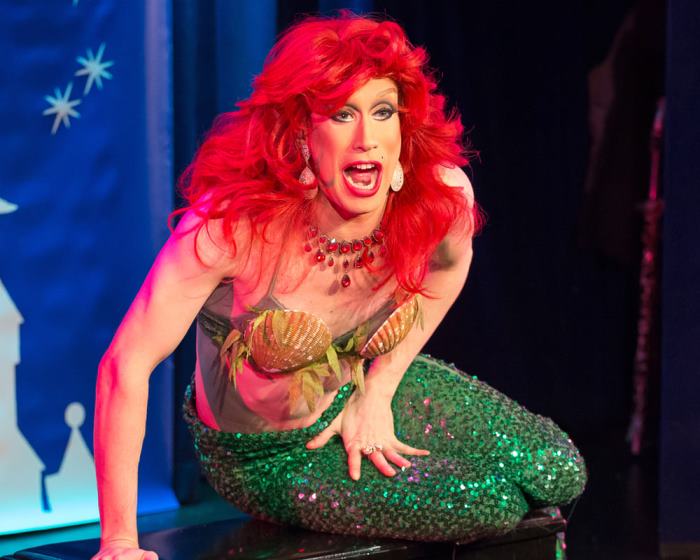
The long-running hit parody Distorted Dizney by drag performance group Twizted Sisterz has re-awakened from the pandemic-time curse on live performances to resume its eight-year run on select Fridays at The Laurie Beechman Theatre. Originally conceived by Daniel Logan (who is no longer affiliated with the current production) in March 2012, the late-night cabaret is an outrageously funny cult favorite inspired by Disney’s iconic princesses, villains, and other familiar characters from the animated children’s classics that have been re-envisioned in an underground “Magical Queendom” for a decidedly adult high-camp-loving audience.
Twizted Sisterz. Photo by Hunter Canning.
Performed by a troupe of four fabulous lip-syncing ‘ladies’ (current Twizted Sisterz are Brenda Dharling, Holly Dae, and Pixie Aventura, with Androgyny in December and Bootsie LeFaris in January), the 75-minute non-stop extravaganza features dazzling costumes, raucous over-the-top comedy, raunchy audience participation, high-energy dance numbers filled with dizzying swirls and the highest of high kicks, and farcical references to such pop-culture goddesses as Toni Basil, Tina Turner, Christina Aguilera, Cher, Patti LuPone, Idina Menzel, Precious, Rihanna, the Mean Girls, and more thrown into the mix.
Host Holly Dae kicks it off with a live welcome and closes with a final farewell, both in direct address, while interacting with the audience and giving everyone the important opening reminder to “Drink, drink, drink!” because “the more you drink, the more . . .” (no spoilers here; you’ll have to go to the show to get that hysterical punchline).
Holly Dae. Photo by Hunter Canning.
Group segments at the beginning, middle, and end of the show, devised by the original 2012 cast, are interspersed with a non-stop sequence of featured solo numbers crafted by each of that night’s performers, who lip-sync to the well-known recorded songs and short voice-over narratives, monologues, and dialogues, comprised of multiple sound bites pulled from the movies, TV, pop music, and even viral videos (among them, the yearning of a Little Mermaid for “the carnal benefits of being an anatomically correct woman”), with hilariously histrionic moves and expressions.
Holly told me, “I love doing all of my characters in the show, however probably the one I have the most fun with is Cruella [de Vil, from the Disney film 101 Dalmations]. I get to be kooky crazy and of course evil and it’s so much fun. My favorite thing about performing live again is just the energy that you get from an actual audience. There is an excitement that only comes from a live audience. Just being able to hear people laugh along with you means a lot.”
With its long history of sold-out performances, be sure to get your tickets for this month’s Distorted Dizney soon. And don’t forget to bring lots of tissues, because you’ll be laughing so hard that tears – along with your heavy eye make-up – will be running down your face.
Running Time: Approximately 75 minutes, without intermission.
Distorted Dizney next plays on Friday, December 17, 2021, and January 14, 2022, beginning at 10 pm, at The Laurie Beechman Theatre at West Bank Cafe, 407 West 42nd Street, downstairs. NYC. For the full upcoming schedule and tickets (priced at $22, plus a $20 per person food/beverage minimum), call (212) 352-3101, or go online. Following CDC and NYC guidelines for COVID-19 safety, everyone must show ID and accepted proof of vaccination for entry.
As the performing arts world still reels from prolonged, pandemic-induced closures, a pair of 34-year-old entrepreneurial Washington pianists have brought to life their long-held dream of an innovative concert series. “This might be our only shot for this year,” Christopher Schmitt recalled thinking in the leadup to the Washington Arts Ensemble’s September 17, 2021, inaugural concert, concerned about possible future shutdowns. But in its first three months, the chamber music group he launched with fellow Juilliard alum Natalia Kazaryan has already sold out monthly performances to an enthusiastic audience that keeps clamoring for more.
In its first three months, the Washington Arts Ensemble has already sold out monthly performances to an enthusiastic public that keeps coming for more. Photo by Olivia Hampton.
It’s an unusual turnout for a newcomer to a classical music scene that has a well-known audience problem—the public trends whiter and older, and concert halls struggle to fill their seats. At least, so we are told. Washington Arts Ensemble offers a glimpse of what the future could look like for these centuries-old forms: a diverse crowd packing a venue where young and old mingle and share a passion or curiosity for classical music. “We deliberately market to people of different age groups,” Schmitt explained. “I find that with almost everybody, they prefer to have some level of diversity in the audience for their own stimulation.”
Much of it has to do with breaking down barriers to a music genre often perceived as inaccessible and elitist. The ensemble’s tickets are priced reasonably, ranging from about $15 to $45 apiece, and the shows offer a communal experience where the artists themselves interact with the audience by socializing and introducing the music. “I don’t know of any place that is fantastic at both those things, that is at the upper echelons in terms of quality and also has this audience component as good at the best,” said Schmitt, a member of the U.S. Marine Band who has performed in the U.S. and abroad.
Here, both the uninitiated and aficionados are welcome; a jazz enthusiast snaps pictures of the performance and claps between movements while a concert veteran revels in the high-charged interpretation. As she opened a November concert by introducing Mozart’s Piano Quartet No 1 in G minor, Kazaryan surprised both the audience and the performers by asking the string players to join her in transposing the first few bars in a major key on the spot. It sounded rather charming, but a world apart from the original minor key. This little exercise primed the ears of those seated for a new understanding and appreciation of the piece in its original form.
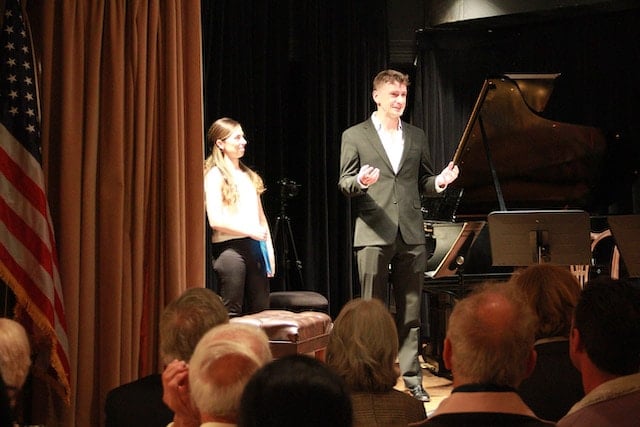
Pianists and former Juilliard classmates Natalia Kazaryan, left, and Christopher Schmitt, right, introduce the audience to the Washington Arts Ensemble’s program of Mozart and Brahms piano quartets at the Arts Club of Washington on November 19, 2021. Photo by Olivia Hampton.
Kazaryan, violinist Laura Colgate, violist Jacob Shack, and cellist Loewi Lin bounced off one another intuitively in a fiery performance after just a couple of rehearsals together. “The exact way that’s done—you can’t dictate it,” Schmitt said. “It’s both following and leading, simultaneous and consistent for all four of us. Little tiny indications, it’s all intuition.”
The concerts burn with the spirit of chamber music, a form that emerged in full force in the late 18th century and was originally intended to be played by small groups in a home’s room (or “chamber”) for the enjoyment of other musicians and listeners. At the Arts Club of Washington—a lavishly furnished historic mansion where President James Monroe once lived—the ensemble’s concerts take place in the Monroe Gallery, a converted parlor that can seat around 90 guests. Economists and policymakers rub shoulders with students, connect over drinks and fine hors d’oeuvres, experience live music together, and meet again afterward to engage with the artists themselves.
At the ensemble’s events, young and old connect over drinks and bites, experience live music together, and meet again afterward to engage with the artists themselves. Photo by Olivia Hampton.
The programming also reflects the founders’ ambitions of accessibility, mixing repertoire staples with lesser-known works, including some by women. An October concert featured three piano trios, with Rebecca Clarke’s richly textured E flat minor piece closing out an evening that included Claude Debussy’s teenaged venture into the form and Beethoven’s subtle Op. 70 No. 2 work in E flat Major. “People will get what they love, but they will also learn something new. That’s really important for us, that balance of programming: honoring tradition while also introducing the public and also ourselves” to less familiar repertoire, said Kazaryan, who grew up in Georgia in the Caucasus region that straddles Europe and Asia. As a soloist performing across the U.S. and Europe, the Howard University adjunct professor has also championed works by women.
Schmitt noted concertgoers’ enthusiasm about their separate performances of Clarke’s trio and Nadia Boulanger’s Three Pieces for Cello and Piano. “We’re unapologetic about playing Mozart and Brahms. But we also demonstrate that we are committed to the music of minorities, and we show that in the majority of our programs,” Kazaryan explained. “The pieces by women, they belong on the program because they can hold their weight—and that’s the only reason they are there. It’s not to check a box.”
Pianist Christopher Schmitt talks about the Brahms Piano Quartet No. 3 in C minor before a Washington Arts Ensemble performance with violinist Laura Colgate, left, violist Jacob Shack, center, and cellist Loewi Lin, right, on November 19, 2021. Photo by Olivia Hampton.
The ensemble is still very much in beta mode in this early phase of its adventure. “It’s word of mouth at this point, but we will take our marketing to the next level and keep trying to spread the word to appeal to different areas, different demographics, because there’s something for everybody,” said Kazaryan. The ensemble rents out the Arts Club, which takes a percentage of ticket sales but also pays for half of all recordings provided as a digital alternative, in a mutually beneficial arrangement that’s as much investment as sponsorship. The first concert was live-streamed in collaboration with The Violin Channel (see below).
While awaiting nonprofit status, the group accepts donations via the Arts Club and fundraising platform Fractured Atlas, its founders take no pay, and the budget is just tens of thousands of dollars. But the ensemble is already dreaming big, with plans to extend beyond the Arts Club to offer performances in larger concert halls, museums, private homes, and outdoors, as well as educational programs.
In addition to performing, the two pianists also run the show, doubling as arts administrators. The flexible ensemble has vowed to provide generous compensation for its rotating set of string players and lyric artists from the outset. “One thing that makes us unique as musicians and musician-administrators is that we’re very savvy with finances and expenses,” Schmitt said, noting that the group needs donations to cover only about 25 percent of operating expenses. “We really want to pay our musicians very well. That’s very important to us because we want to have a very high level and also just be respectful of someone’s time.”
Being small makes the group very nimble. So when a fire broke out just days before Thanksgiving in the Arts Club’s kitchen, forcing the venue to exceptionally close its doors through January, Schmitt and Kazaryan were able to quickly pivot to hosting their next concert at a private home. The December 10 song recital features mezzo-soprano Chrystal E. Williams, who made a celebrated Metropolitan Opera in the 2019–2020 season as Maketaten in Philip Glass’s Akhnaten. She will perform a number of Lieder, or art songs, with Kazaryan at the piano. The pieces range from Robert Schumann’s Frauen-Liebe und Leben, based on a set of love poems from a woman’s perspective, to Brazilian folkloric songs composed by Ernani Braga and “You Can Tell the World” by Margaret Bonds—one of the first Black composer-performers to gain widespread U.S. recognition.
The concert will mark the first of what the group is dubbing “S Street Salon” events, in a nod to the eponymous Washington gatherings of Harlem Renaissance intelligentsia that featured the likes of Langston Hughes and Anne Spencer. Hosted at the pianists’ own homes and those of their friends, these more intimate gatherings will still be bookended by cocktail receptions, but with just about 40 spots available.
Natalia Kazaryan greets a concertgoer after a performance. Photo by Olivia Hampton.
Throughout their endeavors, Kazaryan, Schmitt, and their colleagues share an unrelenting and infectious passion for what they do as musicians. “Playing that kind of music is why I get up in the morning,” Schmitt told a packed room before launching into the Brahms Piano Quartet No. 3 in C minor during the November concert. He explained how Brahms injected a great deal of subjectivity and personal expression into classical forms of an earlier era, while also describing the call and response between strings and piano that characterizes much of the piece.
The third movement is “just so breathtakingly beautiful,” Schmitt said. Indeed, there were quite a few wet eyes during the prolonged cello solo. “The second that movement starts, I don’t care if I literally light the piano on fire for the last movement,” Schmitt said in an interview days after the concert. “Time stops and nothing else matters.”
Chrystal E. Williams and Natalia Kazaryan
The Washington Arts Ensemble‘s next monthly concert will be an evening of Lieder, featuring breakout mezzo-soprano Chrystal E. Williams and pianist Natalia Kazaryan on December 10, 2021, at S Street Salon, 1919 S Street NW, Washington, DC. Tickets are available online.
Three long-time holiday favorites are getting a new life this season – one with a live on-stage production of an animated TV special, one with an all-new streaming puppet film, and one with an updated virtual sequel to a 19th-century classic.
A Charlie Brown Christmas: Live on Stage – Charles M. Schulz’s Emmy and Peabody Award-winning story has been a longstanding annual tradition since it first aired on television over 50 years ago. Now, Eric Schaeffer’s live stage adaptation of the family-friendly animated TV special by Bill Melendez and Lee Mendelson brings all your favorite characters to life, as Charlie Brown, Snoopy, Lucy, Linus, and the rest of the Peanuts gang journey to uncover the true meaning of Christmas. Before making its NYC premiere at The Palladium Times Square on Tuesday, December 21, the show will play an engagement through Sunday, December 19, in Westchester County at the Chappaqua Performing Arts Center (480 N. Bedford Road, Chappaqua, NY).
The new theatrical version, produced by Gershwin Entertainment and directed by Robert Coulson, employs both the familiar dialogue from TV and the classic score by Vince Guaraldi, while incorporating original choreography by Charlotte Bydwell, music supervision and additional arrangements by Garrett Taylor, scenic design by Adam Koch Associates, costumes by Jeffrey Meek, lighting by Nathan Scheuer, and sound by Josh Samuels.
The cast. Photo by Isaac Campbell.
The cast features Connor Barr as Charlie Brown, Will Jewett as Snoopy, Leah Windahl as Lucy, D’Marreon Alexander as Linus, Giuliana Augello as Violet, Sophia Delucchi as Sally Brown, Andrew Hainz as Pigpen, Brent C. Mauldin as Schroeder, Lucy Rhoades as Frieda, Elliot Wallace as Shermy, and Emma T. Wilcox as Patty, with Chloe Gabila and Sam Sanderson rounding out the ensemble. After their final bow, the audience is invited to join with them in the singing of traditional Christmas songs and carols.
A Charlie Brown Christmas: Live on Stageplays December 21-24, 2021, at The Palladium Times Square, 1515 Broadway, NYC. For tickets, starting at $25, go online. All audience members must present proof of a full COVID-19 vaccination, or a negative COVID-19 diagnostic test taken 48-72 hours prior to the event date, in order to enter the venue and to attend the show. Masks should be worn inside.
Paddington Saves Christmas – For more than 60 years, British-born writer Michael Bond has delighted readers the world over with his children’s books about Paddington, the marmalade-loving bear from Peru, whose stories of kindness and humor appeal to all ages and have ensured his popularity from one generation to the next. His adventures have been adapted several times for television, and beginning in 2014, Paddington made his debut on the big screen.
This season, in association with The Copyrights Group and StudioCanal, Rockefeller Studios presents a special holiday event starring the beloved bear, inspired by Rockefeller’s own highly acclaimed 2020 stage productionPaddington Gets in A Jam. Streaming in the US, UK, Canada, Australia, and New Zealand through January 4, 2022, this unique holiday puppet performance is the first virtual production created by Rockefeller Studios, marking Rockefeller’s expansion into filmed content.
In the new 35-minute work, Paddington’s ever-grumpy neighbor Mr. Curry is panicking in anticipation of the arrival of an important visitor for the holidays, so he volunteers to help Mr. Curry prepare his house for Christmas. But in typical Paddington fashion, his good intentions lead precipitously from one predicament to the next!
Estella Scrooge: A Christmas Carol with a Twist – A modern-day take on Charles Dickens’ beloved 1843 novella, incorporating additional characters and plot lines from Great Expectations, Little Dorrit, Bleak House, and other of his novels, this virtual cinematic musical-theater adventure, which premiered in 2020, was planned and digitally captured during the pandemic. Utilizing the cutting-edge technology of a green screen, hundreds of images, animations, and digital environments were blended in post-production with the performance footage of the actors, to bring the story magically to life in a two-hour hybrid of theater and film.
In the new narrative by Tony Award winner John Caird (book and direction) and Tony nominee Paul Gordon (book, music, and lyrics), Estella Scrooge, the great-great-great-great-granddaughter of Ebenezer, is a young Wall Street tycoon with a penchant for foreclosing. When a hotelier in her hometown of Pickwick, Ohio, has defaulted on his mortgage, she goes to Harthouse personally on Christmas Eve to take possession. Upon arrival, she discovers that the defaulting party is her childhood sweetheart Pip Nickleby, a generous soul who has transformed the property into a refuge for the sick, dispossessed, and homeless. A freak snowstorm that night forces Estella to take refuge there, and as was the case with her ancestor Ebenezer, she is haunted by three ghostly visitations that show her the value of goodness.
A 2021 Telly Award Winner, honoring excellence in video and television across all screens, Estella Scrooge features a roster of Broadway stars, including Betsy Wolfe (Waitress) in the titular role, Clifton Duncan (The Play That Goes Wrong) as Pip, 2020 Tony Award winners Lauren Patten (Jagged Little Pill) as Dawkins and Danny Burstein (Moulin Rouge! The Musical) as Ebenezer Scrooge, and Tony nominees Patrick Page (Hadestown) as Mr. Merdle and Carolee Carmello (Parade) as Marla Havisham. The cast is supported by a top design team, with musical supervision by Brad Haak, choreography by Natalie Lomonte, costumes by Somie Pak, hair and makeup by Dena Olivieri, props by Katherine White, and production art by Zach Wilson, with Tyler Milliron serving as director of photography and editor.
With its devised concept, entirely immersive set, and incorporation of multimedia elements galore, Man Covets Bird at Spooky Action Theater marks the most THEE-yah-tah experience for those of us embarking on our mid-COVID return to the arts. But make no mistake, I do not mean to say that Man Covets Bird is inaccessible. In fact, it is beautifully simple, which allows its experimental staging and structure to shine.
Emily Erickson, Jonathan Feuer, and Navi in ‘Man Covets Bird. Photo courtesy of Spooky Action Theater.
Finegan Kruckmeyer’s short and sweet play follows a semi-unnamed character, Man, as he takes a coming-of-age journey through a similarly unnamed city, to finally arrive not only at himself but also at something bigger. Infancy, childhood, and adolescence are breezed through within the first five to ten minutes, so the play arrives at its call to adventure when Man suddenly feels alien to his parents and leaves home to build his own life. As is apparent from the title, he brings with him a new companion, a bird, which his parents cannot see (we too as the audience cannot see the bird). From there, the story feels like a traditional hero’s journey as the man tries to find and share happiness by way of his bird.
Jonathan Feuer in ‘Man Covets Bird. Photo courtesy of Spooky Action Theater.
Jonathan Feuer (Man) is expressive, but never over the top, fully convincing in every interaction with his bird that we never see. Emily Erickson and Navi (Ensemble) do an excellent job of creating memorable, differentiated faces that show us the emotions of a multitude of nameless characters. Perhaps the most incredible feat accomplished by the players is their ability to oscillate seamlessly between the characters’ emotional involvement and narrators’ warm yet detached objectivity. All three do their best work as these blank slates, disappearing into each role and each moment completely.
Nadir Bey’s set is a marvel, both vivid and muted at the same time. There are constant surprises hidden within it that go unnoticed until they are used. It’s reminiscent of Where’s Waldo with how much it has going on, or a touch-and-feel book with the way it lights up the senses. Occasionally, that richness of effect and sensory elements like music briefly separate the audience from the moment simply because there is so much else going on. But for all of these technical complexities, the individual pieces feel clean and familiar, a fort put together from objects the entire audience knows, making a generally smooth transition from reality to the fantastical. Lighting (Hailey LaRoe), costumes (Danielle Preston), sound and music (Brandon Cook, Navi, Emily Erickson), and projection surprises (Patrick W. Lord, Zavier Augustus Lee Taylor), work together seamlessly to the same effect, engulfing us in the bird’s nest and the man’s world.
Shanara Gabrielle’s phenomenal direction (and, because this is a devised piece, the entire artistic team) indeed seems to want the play to sweep the audience in, make us feel, each in our own way, a part of things. This can be seen in the fact that the play is staged in the round, with spectators entering the stage and the set itself as soon as they walk in, then opting to sit in one of four quadrants. Actors often walk over to these quadrants and make direct eye contact with audience members as they are speaking. In maybe the most moving moment of all, we are engaged directly, offered the chance to listen, and fully fall into the world they’ve created.
As COVID continues to impact our lives, these expressions of community are to be savored all the more. Constructing Man Covets Bird as a wholly collective piece in 2021 feels opportune, redefining the theatrical experience to reflect what we are all going through now, as we decide when to begin coming out of isolation, and how ready we are to share our birds with the people around us. The show does make you ponder this, but most of all, it is engrossing as a world where those problems are less complicated, where walls can light up, and a bird in your pocket can begin a conversation with those you see but ignore every day. Man Covets Bird works best like this: as an impermanent, meaningful escape into a parallel world for a brief time.
Navi, Jonathan Feuer, and Emily Erickson in ‘Man Covets Bird. Photo courtesy of Spooky Action Theater.
If I’m honest, I don’t expect that this is a play I will keep talking about a month from now. Although I found it deeply applicable to this moment, it was not so specific and complex that I will be continuously unpacking it. What I will not forget, though, is how I felt while watching it. The magic of Man Covets Bird is in experiencing it, in 75 minutes where it does not feel so difficult to find ourselves, and come away feeling that much more connected to ourselves and our community.
Running Time: 75 minutes, with no intermission.
Man Covets Birdplays through December 19, 2021, performing Thursday through Saturday evenings with a Sunday matinee, at Spooky Action Theater, 1810 16th Street NW, Washington, DC. For tickets (general admission, $30–$40; seniors, $25–$35; students, $20), call the box office at (202) 248-0301, or purchase them online.
COVID Safety: Audience members will show proof of full COVID vaccination before entering the theater. Both audience members and theater staff will wear masks at all times while inside the building.
Stopping off at Woolly Mammoth on its way to Broadway — following an off-Broadway run that won it the Pulitzer Prize for Drama — Michael R. Jackson’s extravagantly original musical, A Strange Loop, is in a class of smash hits by itself. I’ve been trying to think of anything else that comes close to resembling it, and I can’t. In thematic dimensionality and depth, raw candor, and knockout meta-theatricality, A Strange Loop is beyond compare.
At the show’s core is the unrelentingly self-referential story of a fat Black queer cis man trying to write a musical about a fat Black queer cis man trying to write a musical about…and so on. At the center of this funhouse of mirrors is a 25-year-old semi-autobiographical character named Usher (who also works as an usher to support his writing aspirations). Although gifted with scathing wit and luscious musicality, he is awash in self-loathing and sexual ambivalence and “starved for Black affirmation and affection.” An agonized auteur, he has written into the script six actors to play (and project) his Thoughts. Assuming a swirling multiplicity of roles, they variously torment him with self-doubt and taunt him for his artistic and sexual failure.
Antwayn Hopper (Thought 6), L Morgan Lee (Thought 1), Jason Veasey (Thought 5), Jaquel Spivey (Usher), James Jackson, Jr. (Thought 2), John-Michael Lyles (Thought 3), John-Andrew Morrison (Thought 4) in ‘A Strange Loop.’ Photo by Teresa Castracane.
The wonder of the show is that this ruthlessly self-lacerating lead — played by the phenomenally talented and charismatic Jaquel Spivey, making his professional debut — becomes easily one of the most adorably complex characters who might ever win you over onstage. Within minutes you begin to root for him. The more his Thoughts dump on him, the more his Bible-thumping parents deride him, the more desperate and demeaning his sex life, the more lovable he becomes. And that is just a glint of the genius in this musical.
Precisely in his specificity, Usher becomes instantly empathetically resonant. Plainly his struggle to own a sense of self he can embrace without disgrace is embedded in social particulars and signifiers—his BMI, his Blackness, his quest for dick. (Be advised that A Strange Loop does not hold back in graphic detail about some gay male sex practices.) And yet in what has to be one of musical theater’s greatest dramatic reversals, Usher’s recircling solipsism of longing to feel worthy of someone’s love comes to seem essentially like everyone else’s too.
Strangely, we are looped in.
The set by Arnulfo Maldonado starts out a gray stone wall with six doorways in which appear the six Thoughts, who are costumed by Montana Levi Blanco in a mix and mashup of neutral work clothes and workout togs. Under a rumpled plaid shirt, Usher himself wears his politics on his black T-shirt (with a nod to bell hooks). What begins drab eventually turns fab, with eye-popping lighting effects by Jennifer Schriever plus a shape-shifting set that culminates in a stunning scenic reveal: for a brain-blasting gospel musical that Usher writes to satisfy his homophobic folks.
The extraordinary ensemble — L Morgan Lee (Thought 1), James Jackson, Jr. (Thought 2), John-Michael Lyles (Thought 3), John-Andrew Morrison (Thought 4), Jason Veasey (Thought 5), Antwayn Hopper (Thought 6) — were all members of the off-Broadway original cast and are clearly at home in Usher’s distraught mental landscape. Their vibrant vocals (music direction by Rona Siddiqui) and vigorous choreography (by Raja Feather Kelly), combined with their countless character impersonations, make for a musical theater lover’s dream team.
James Jackson, Jr. (Thought 2), L Morgan Lee (Thought 1), Antwayn Hopper (Thought 6), Jaquel Spivey (Usher), John-Andrew Morrison (Thought 4), Jason Veasey (Thought 5) in ‘A Strange Loop.’ Photo by Teresa Castracane.
At one point all six Thoughts don dusty-rose robes emblazoned with a Christian cross to portray Usher’s mother. At another point, she is portrayed in a pink go-to-church dress by John Andrew Morrison singing “Periodically” — one of many show-stopping solo turns. The Thoughts’ dramatic fluidity and versatility sustain an astonishing support system for Spivey’s wrenching performance as Usher, whose solos and scenes alone on stage have breathtaking conviction.
Jaquel Spivey (Usher) in ‘A Strange Loop.’ Photo by Teresa Castracane.
In addition to the plotline that concludes with Usher’s over-the-top-satirical gospel musical (“AIDS is God’s punishment” is the refrain), A Strange Loop features a haunting story arc about Usher’s sex life. Determined to get (as the script puts it) butt-fucked more often, he ventures into “Gayville,” where he faces app rejection (“Too Black. Too fat. Too fem”). Then (in a number called “Inwood Daddy”), an older white man on the down-low lures him into what turns out to be brutal anal intercourse as racist domination. What follows that hard-to-watch scene may be one of the most revelatory numbers ever in a Broadway-bound musical. It’s called “Boundaries”:
WHY DID I DO THAT?
DOWN ON MY HANDS AND KNEES?
WHY PLAY SUBMISSIVE?
WHAT ARE MY BOUNDARIES?
…
WHY DO I DO THIS?
BOW DOWN AND PEOPLE PLEASE
I CAN’T KNOW FREEDOM
WITHOUT CLEAR BOUNDARIES
The script, I hasten to add, is loaded with laughs; it whizzes by with like a zillion zingers, and Director Stephen Brackett paces the show brilliantly and hilariously. And yet savor those amazing moments when the laughs abruptly halt, as though the audience as one just got gobsmacked by a damn-that-was-deep truth.
L Morgan Lee (Thought 1), John-Michael Lyles (Thought 3), John-Andrew Morrison (Thought 4), Jaquel Spivey (Usher), Jason Veasey (Thought 5), Antwayn Hopper (Thought 6), James Jackson, Jr. (Thought 2) in ‘A Strange Loop.’ Photo by Teresa Castracane.
In a sense, A Strange Loop is a singular poet’s excavation of all the stuff that stands in the way of claiming the value of their first-person singular pronoun — their journey from self-loathing to self-respect. Many another theater artist has done autobiographical digging and come up with a work that lets us know them.A Strange Loop is in that rare category of painfully honest self-referential works that help us sense something unsaid about ourselves.
Running Time: Approximately one hour and 40 minutes with no intermission.
EXTENDED: A Strange Loopruns through January 9, 2022, at Woolly Mammoth Theatre Company, 641 D St NW, Washington, DC, with performances Tuesday to Friday at 8 pm; Saturday at 3 pm and 8 pm; and Sunday at 2 pm and 7 pm (except December 12, which features a 7 pm performance only); Monday, December 27 at 8 pm. Single tickets start at $32 and are available online, by phone at (202) 393-3939, and via email at tickets@woollymammoth.net. Twenty-eight Pay-What-You-Will tickets are also available to every performance by selecting the PWYW seats and adjusting the ticket price. Patrons who are 30-years-old and younger may, at any time, purchase Section C tickets for $20 to any performance. There are also discounts available for educators, first responders, and active U.S. military personnel, spouses, and veterans. More information is available at woollymammoth.net.
COVID Safety: Entrance to any event at Woolly Mammoth will require proof of vaccination or, for those who are not vaccinated, proof of a negative COVID-19 PCR test taken within 72 hours of the event start time. Guests may show physical or digital proof of their health status. Masks must also be worn at all times while in the building.
A STRANGE LOOP
Book, music, and lyrics by Michael R. Jackson
Directed by Stephen Brackett
Choreographed by Raja Feather Kelly
Music directed by Rona Siddiqui
Produced in association with Playwrights Horizons and Page 73 Productions
CAST Jaquel Spivey (Usher), L Morgan Lee (Thought 1), James Jackson, Jr. (Thought 2), John-Michael Lyles (Thought 3), John-Andrew Morrison (Thought 4), Jason Veasey (Thought 5), Antwayn Hopper (Thought 6), and Christopher Michael Richardson (Understudy for Usher and Thought 4).
CREATIVE TEAM
Scenic design by Arnulfo Maldonado, costume design by Montana Levi Blanco, lighting design by Jennifer Schriever, sound design by Drew Levy, hair/wig/makeup design by Cookie Jordan, vocal arrangements by Michael R. Jackson, intimacy choreography by Chelsea Pace, orchestrations by Charlie Rosen
MUSICIANS
Keyboard & Conductor: Rona Siddiqui
Keys/Guitar: Beth Callen
Bass: Max Murray
Drums: Erika Johnson
Reeds: Dana Gardner
Rehearsal Pianist & Stand-by Conductor: Marika Countouris
Schedule of accessible performances during the run of A Strange Loop
Open Captioned performances feature permanently visible, on-screen text description that displays dialogue, identifies speakers, and describes other relevant sounds.
Tuesday, December 7
Tuesday, December 14
Tuesday, December 21
Tuesday, December 28
ASL Interpreted performances feature interpreters placed inside the theatre who translate what the actors are saying and expressing to the audience.
Saturday, December 11 Matinee
Sunday, December 19 Matinee
Audio Described performances feature live narration interspersed with the actors’ dialogue used to provide information surrounding key visual elements.
Wednesday, December 15
Wednesday, December 29


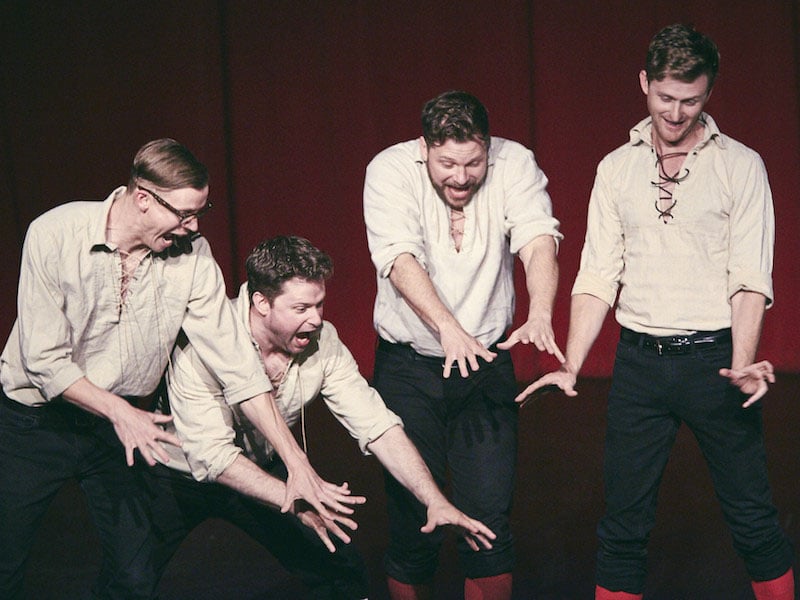


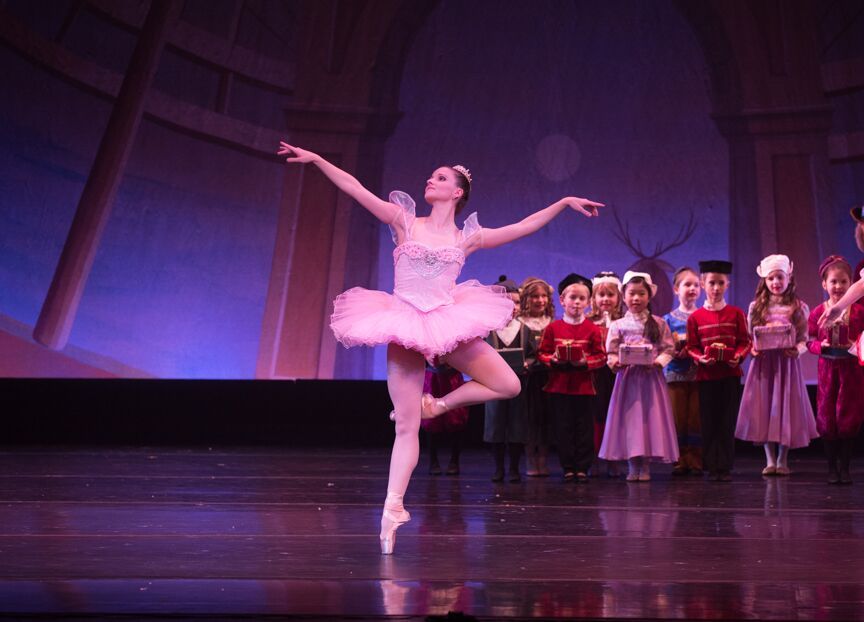


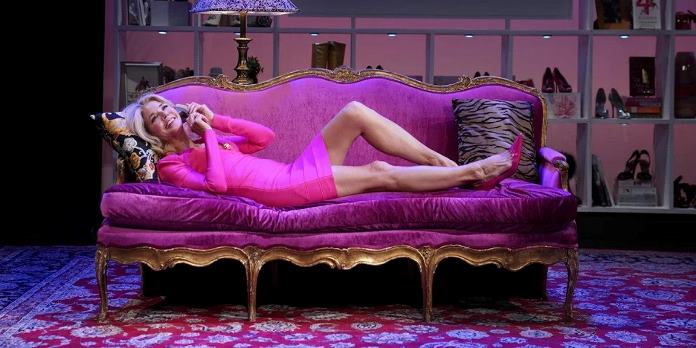
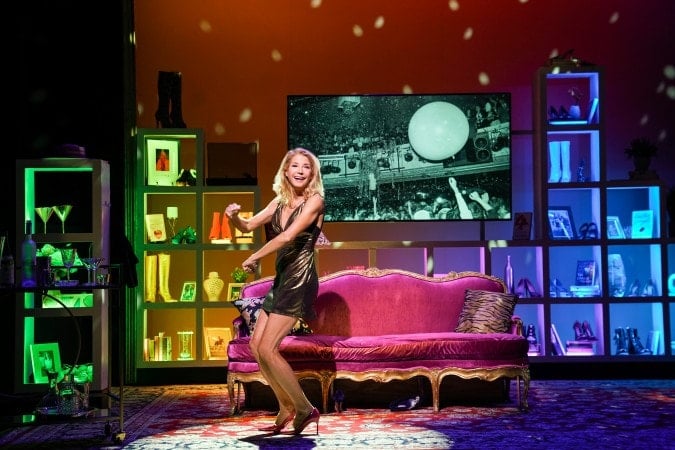
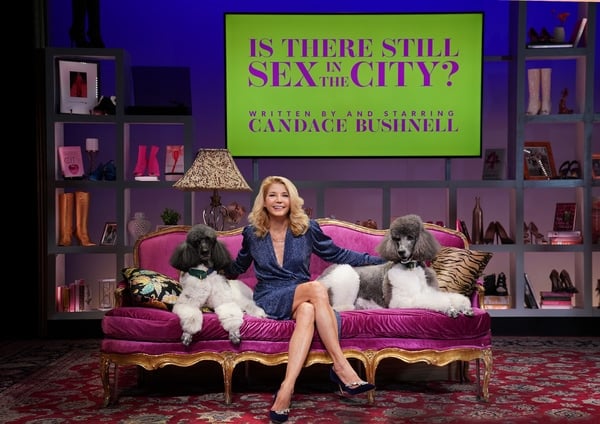

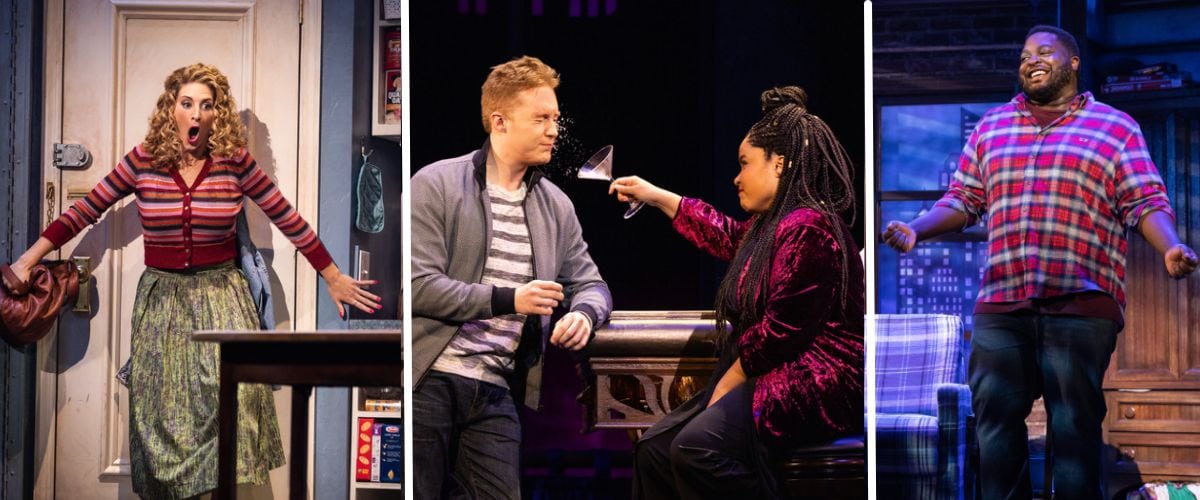
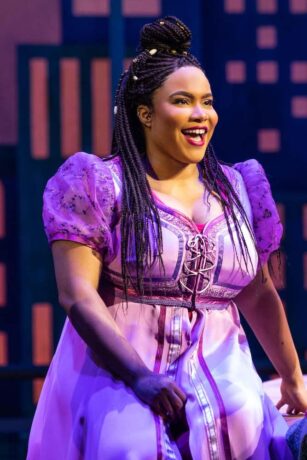


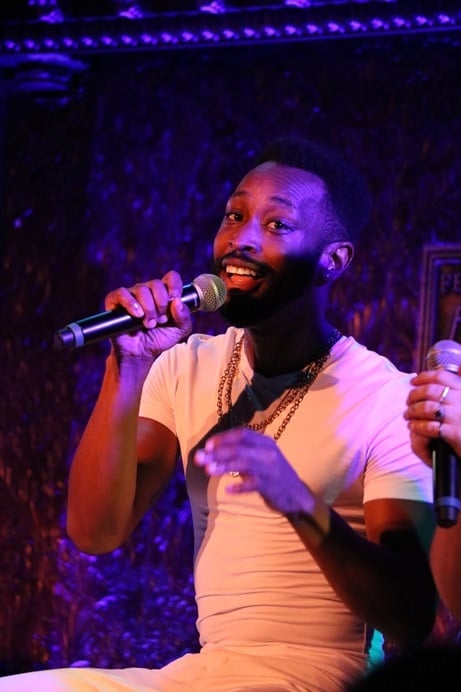


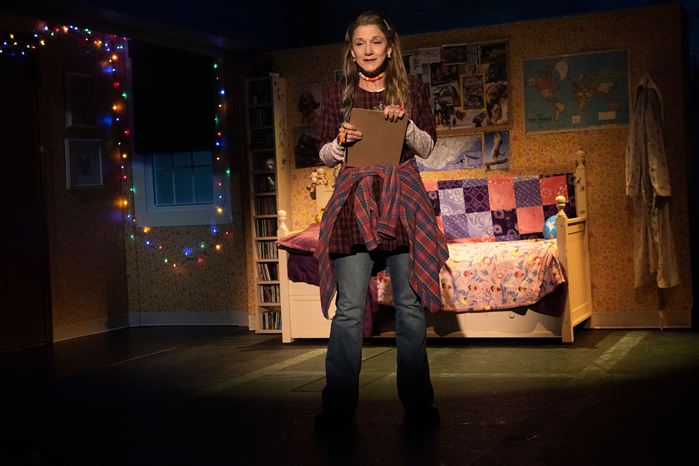

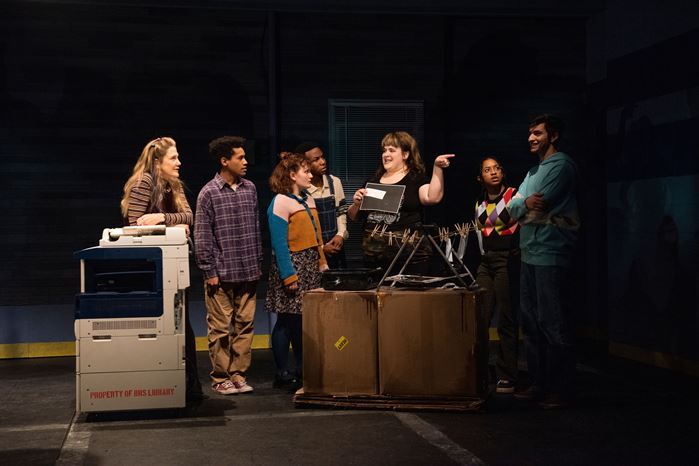



 Events DC, the official convention and sports authority for the District of Columbia, delivers premier event services and flexible venues across the Nation’s Capital. Leveraging the power of a world-class destination and creating amazing attendee experiences, Events DC generates economic and community benefits through the attraction and promotion of business, athletic, entertainment and cultural activities. Events DC oversees the Walter E. Washington Convention Center, an anchor of the District’s hospitality and tourism economy that hosts more than 1.7 million visitors and generates more than $400 million annually in direct economic impact, and the historic Carnegie Library at Mt. Vernon Square. Events DC manages the RFK Stadium-Armory Campus (RFK Campus), including Robert F. Kennedy Memorial Stadium, Festival Grounds at RFK Campus, the non-military functions of the DC Armory, and the Skate Park at RFK Stadium. Stay current on the 190-acre RFK Campus Redevelopment Project at
  Theatre Washington is an alliance of theater organizations, theater-makers, and theater supporters that promotes equitable, healthy, and diverse regional theater in the greater Washington, DC, region. They do this through partnerships and programs that celebrate artistic achievement, support institutional growth and advancement, and cultivate collective action.
 Founded in 1984 by Bonnie Nelson Schwartz — who also acted as a producer for the Backstage at the Helen Hayes Awards series — the Helen Hayes Awards recognize outstanding achievements from more than 60 professional theaters and hundreds of theater-makers across the DC area each year. Named for Helen Hayes — the legendary First Lady of the American Theatre and a Washington, DC, native — the awards celebrate the artists and companies whose work makes the Washington, DC, area a thriving, nationally recognized theater community.
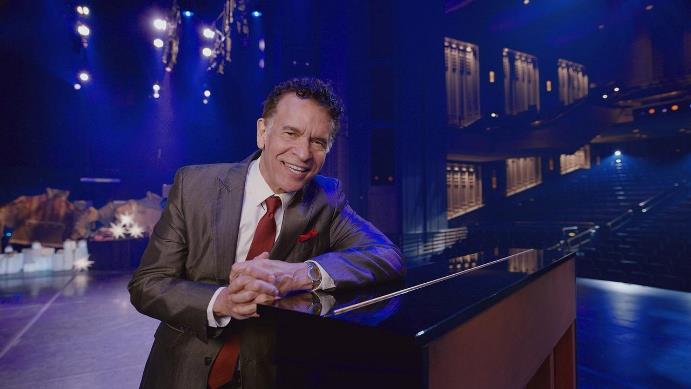


 In late January 2022, the second half of the season begins with
  At the end of February, NextStop will stage
  In April, NextStop is honored to present
  As we emerge from winter, NextStop will partner in April with Reston Town Center to present a very special free-for-all, outdoor production of William Shakespeare’s most beloved comedy,
  Capping off the season will be NextStop’s much-anticipated return to full-scale, live musical theater with a toe-tapping production of
 NextStop will continue their current policies requiring proof of vaccination and mask wearing at all times in the building (with the exception of performers on stage) for the foreseeable future. However, in the new year, the theater will return to their full 100-seat capacity and reopen the bar car for drinks and snacks before performances.